
TL;DR:
- Artwork in lobbies influences visitor perception, reinforces brand identity, and creates emotionally engaging environments. Properly curated and strategically placed art reduces stress, extends dwell time, and improves property value and business outcomes. Effective lobby art is chosen with intent, considering scale, lighting, narrative, and brand alignment from the start.
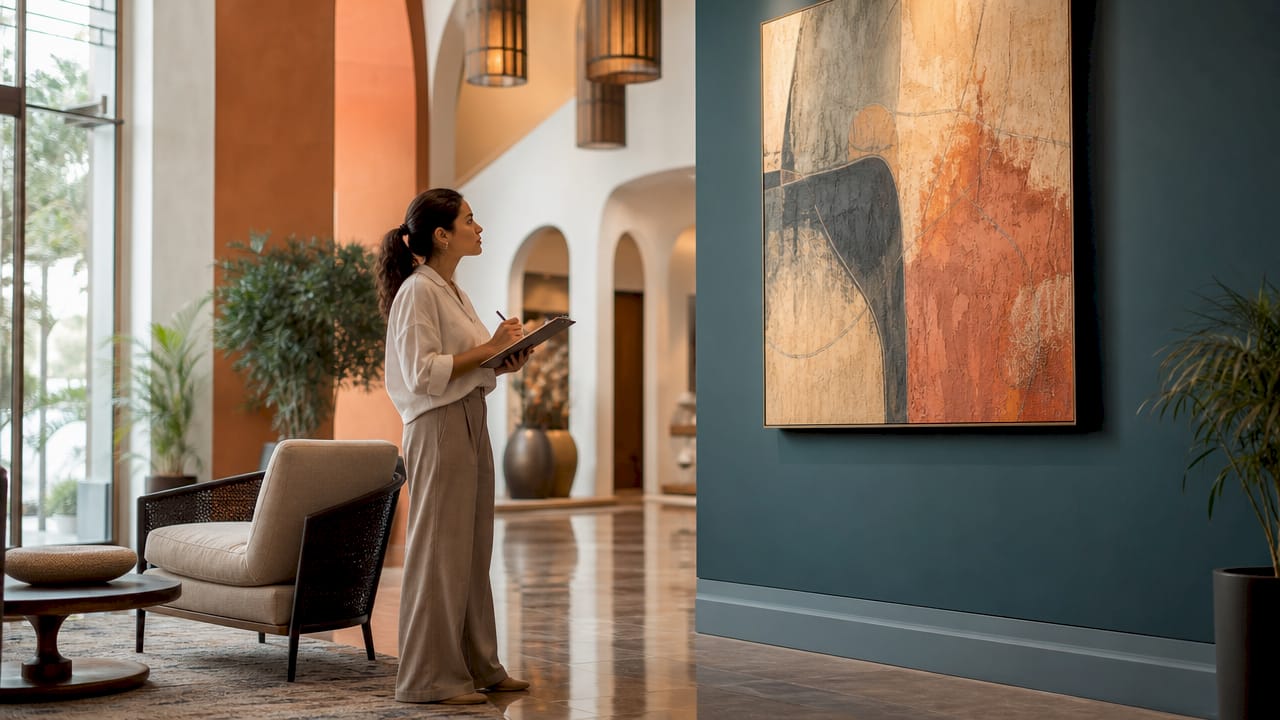
Art in lobbies is defined as the deliberate placement of visual works to shape visitor perception, reinforce brand identity, and create emotionally engaging environments from the moment someone enters a building. This is not decoration. It is placemaking. Research shows that 78% of office employees agree artwork significantly reduces stress, and 85% of visitors to public spaces use them to engage with others. For interior designers, property developers, and business owners, understanding why art matters in lobbies is the difference between a space people pass through and one they remember.
Why does art matter in lobbies for visitor experience?
Art reduces stress, lifts mood, and increases the time visitors choose to spend in a space. These are not abstract claims. 64% of employees say art increases their creativity, and 77% say it encourages them to express opinions. Those figures point to something designers already sense intuitively: art changes how people feel, and how people feel changes how they behave.
The psychological mechanism is straightforward. A lobby is the first point of contact between a visitor and an organisation. First impressions form within seconds. A bare, generic entrance communicates indifference. A considered art installation communicates intention, quality, and care. That signal reaches visitors before a single word is spoken.
Art also extends dwell time. Statement artwork creates moments for guests to pause and engage, which increases positive experience and reduces perceived waiting time. In hotel lobbies, corporate reception areas, and residential developments alike, that pause is commercially valuable.
- Art reduces visitor anxiety and creates psychological safety in unfamiliar spaces.
- Exposure to art boosts creativity and encourages social interaction among visitors and employees.
- Statement pieces extend dwell time by giving visitors a reason to stop and look.
- Memorable art creates a lasting impression that shapes how visitors perceive the organisation.
Pro Tip: Place the most visually arresting piece at the natural sightline when entering, typically 1.5–1.7 metres from floor to centre. This is where the eye lands first and where the emotional impact is strongest.
What role does lobby art play in brand storytelling?
Art communicates brand identity the way a poster on a wall communicates personality. Art conveys aspirational belonging in the same way that objects in a personal space signal who someone wants to be. For a business, the lobby is that personal space writ large. The art chosen tells visitors, clients, and employees what the organisation values and who it aspires to be.
This is why generic stock imagery fails. A print that could hang in any office, hotel, or waiting room tells no story. It signals that no one made a choice. Successful lobby art resonates by aligning the artist’s story, the medium’s texture, and the brand’s aspirational identity. The subject matter, the materials, and even the framing all carry meaning.
Consider how this works in practice:
- Define the brand’s visual language first. Identify three to five words that describe the organisation’s character. Bold, precise, and forward-thinking calls for different art than warm, artisanal, and community-focused.
- Match medium to message. A technology firm might choose large-format abstract prints with clean geometry. A hospitality brand might choose hand-painted works with visible texture and warmth. The medium is part of the message.
- Prioritise artist narrative. Art with a story behind it creates conversation. When a receptionist can say “this piece was created by a local artist using reclaimed materials,” the artwork becomes a talking point that reinforces brand values.
- Avoid the generic. Good art is better than no art, but bad art actively diminishes brand image. A poorly chosen piece signals carelessness more loudly than an empty wall.
Pro Tip: Commission or source art that connects to the building’s location, history, or community. Place-specific art creates an immediate sense of authenticity that generic prints cannot replicate.
What makes lobby art effective? Curation and placement
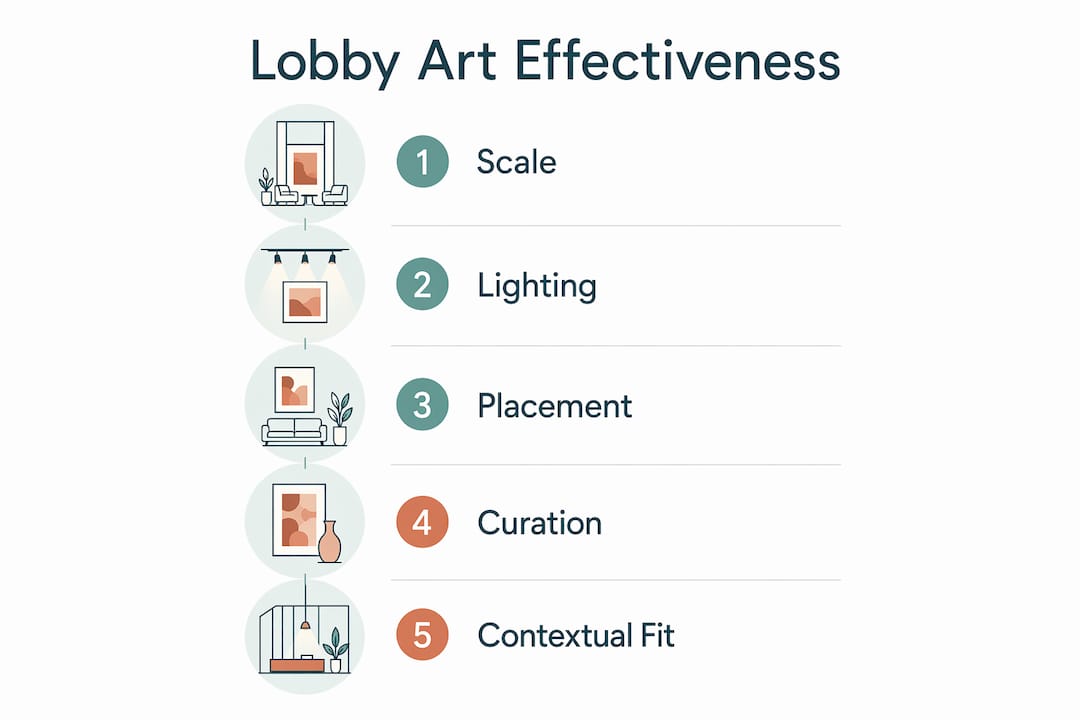
Effective lobby art is not simply about choosing a piece you like. It requires coordinating visual impact with spatial flow, lighting, acoustics, and scale. Curators work closely with architects and designers to ensure every element, from subject to frame, aligns with brand positioning and building identity. That level of coordination is what separates a memorable lobby from a forgettable one.

Scale is the most commonly underestimated factor. A small print on a large wall disappears. The benefits of large-scale art for interior projects are well documented: oversized works command attention, anchor a space visually, and create a sense of confidence and permanence. In double-height lobbies, a single large-format piece often outperforms a grid of smaller works.
Lighting is the second critical variable. Warm lighting triggers psychological comfort and safety. When artwork is lit with warm, directional light, it draws the eye and creates a focal point that feels inviting rather than clinical. Cold, flat lighting flattens texture and reduces emotional impact.
| Element | Weak approach | Strong approach |
|---|---|---|
| Scale | Small prints on large walls | Large-format or oversized works scaled to the space |
| Lighting | Flat, cold overhead lighting | Warm, directional picture lighting or spotlights |
| Placement | Centred at standard height | Eye-level to centre, adjusted for ceiling height |
| Medium | Printed reproductions | Original or hand-finished works with visible texture |
| Narrative | No artist or story context | Artist biography or work statement available on request |
Pro Tip: Test artwork placement with scaled paper templates before committing to installation. A 1:1 paper mock-up on the wall reveals scale and proportion issues that no digital render can fully capture.
How does lobby art contribute to property value and business outcomes?
Art is a measurable commercial asset, not a soft benefit. Spaces with placemaking initiatives including public art see 50% increased dwell time, 63% increased positive sentiment, and 77% higher likelihood of recommendation. Those figures translate directly into occupancy rates, tenant retention, and brand reputation.
Companies that invest in art see improvements in employee wellbeing, brand identity, and property value, with documented examples of higher rental rates and faster lease agreements. For property developers, this is a straightforward return on investment argument. A well-curated lobby signals quality to prospective tenants before they have seen a single floor plan.
The employee dimension is equally significant. Exposure to art at work boosts job satisfaction, reduces staff turnover, and improves productivity. Research published in the Journal of Environmental Psychology shows employees value an employer’s investment in art as a signal of care and respect. That signal reduces churn, which has a direct cost saving.
- Higher dwell time in lobbies increases the likelihood of positive first impressions and conversion for hospitality and retail.
- Art-enhanced lobbies support higher rental rates and faster lease agreements for commercial property developers.
- Employee wellbeing improvements reduce turnover and associated recruitment costs.
- Positive sentiment generated by art increases the likelihood that visitors recommend the building or business to others.
The role of art in communal spaces extends beyond aesthetics into measurable outcomes that property developers and business owners can present to stakeholders with confidence.
Key takeaways
Art in lobbies is a placemaking and branding tool that reduces stress, extends dwell time, and directly improves property value and business outcomes.
| Point | Details |
|---|---|
| First impressions are shaped by art | Visitors form emotional responses within seconds; art sets the tone before any conversation begins. |
| Brand alignment is non-negotiable | Generic art signals indifference; art chosen for its story and medium reinforces organisational values. |
| Scale and lighting determine impact | Oversized works with warm directional lighting create focal points that generic prints cannot achieve. |
| Placemaking drives commercial results | Spaces with art see 50% more dwell time and 77% higher likelihood of visitor recommendation. |
| Art supports employee wellbeing | Research links workplace art to higher job satisfaction, lower turnover, and improved productivity. |
Lobby art is not a finishing touch
I have walked through hundreds of lobbies over the years, and the ones that stay with me share one quality: the art was chosen with intent. Not budget, not trend, not “something neutral that won’t offend anyone.” Intent.
The most common mistake I see is treating lobby art as the last line item on a fit-out budget. It gets selected after everything else is decided, from whatever is left in the contingency fund, by someone who was not part of the original design conversation. The result is a space that looks complete but feels empty. Visitors cannot always articulate why, but they feel it.
The second mistake is confusing inoffensive with effective. Neutral, stock-like imagery avoids risk but creates no connection. Effective lobby art programmes emphasise artist stories, texture, and materials to create authentic engagement. A piece that provokes a reaction, even a quiet one, is doing its job. A piece that provokes nothing is wallpaper.
My honest recommendation is to bring the art brief into the design process at the same stage as lighting and acoustics. Art that is integrated from the start works with the space. Art that is added at the end works against it. The art for hotels guide from Frametheworld illustrates this well: the most successful hospitality lobbies treat art as architecture, not accessory.
— Lennard
Frametheworld’s collections for lobby and commercial spaces
Frametheworld offers curated collections built specifically for the demands of commercial and hospitality interiors. The Wabi Sabi wall art collection features hand-painted abstract works with visible texture and deliberate imperfection, qualities that create warmth and authenticity in reception and lobby environments. For spaces that need a bolder visual statement, the Pop Art collection delivers hand-painted retro and contemporary works with the scale and colour impact that contemporary lobbies demand. Both collections are available in multiple sizes and formats, with bespoke options for projects that require a specific dimension or finish. Interior designers and property developers can browse by style, theme, and format, or contact Frametheworld directly to discuss a commission.
FAQ
What is the main benefit of art in a lobby?
Art in a lobby reduces visitor stress, creates a positive first impression, and communicates brand identity before any verbal interaction takes place. Research shows 78% of employees agree artwork significantly reduces stress in workplace environments.
Does lobby art actually affect property value?
Companies that invest in art see documented improvements in property desirability, including higher rental rates and faster lease agreements. Placemaking initiatives that include art also generate 63% increased positive sentiment among visitors.
How do I choose the right art for a lobby?
Choose art that aligns with the brand’s visual language, uses a medium that reflects the organisation’s character, and carries an artist narrative that staff can share with visitors. Avoid generic reproductions that could hang in any space.
What size artwork works best in a lobby?
Large-format works scaled to the wall and ceiling height consistently outperform smaller prints in lobby environments. An oversized piece anchors the space visually and creates the focal point that makes a lobby feel considered and complete.
How does lighting affect lobby art?
Warm, directional lighting enhances texture, draws the eye to the artwork, and triggers psychological comfort in visitors. Cold, flat overhead lighting reduces emotional impact and flattens the visual qualities that make art engaging.


Laat een reactie achter
Deze site wordt beschermd door hCaptcha en het privacybeleid en de servicevoorwaarden van hCaptcha zijn van toepassing.