
TL;DR:
- Bespoke art is created entirely from scratch based on a client’s specific tastes, space, and vision, ensuring complete originality. It involves deep collaboration between the client and artist, differentiating it from commissioned or custom works that involve less creative control. Proper planning, clear agreements, and patience are essential for a successful bespoke art commission that adds unique value and personal significance to your home.
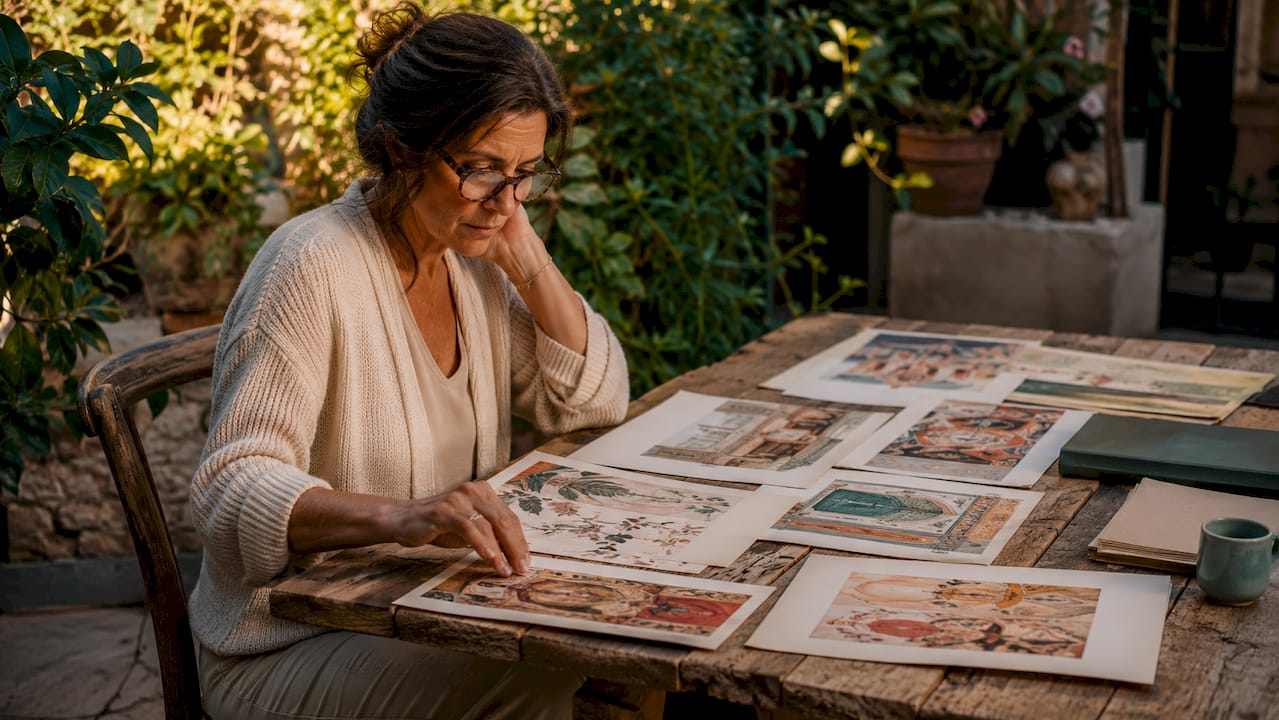
Bespoke art is defined as artwork commissioned to particular specifications, created from scratch to suit one individual’s tastes, space, and vision. The term “bespoke” originates from British tailoring, where a suit was “spoken for” before a single stitch was sewn. In the art world, it carries the same meaning: nothing is pre-made, nothing is generic. Studios like Dream Create Collective and artists such as Keili Major have built entire practices around this model, working closely with clients to produce pieces that could not exist for anyone else. If you are exploring personalised home decoration, understanding what bespoke art means, and how it differs from custom or commissioned work, is the essential first step.
What is bespoke art and how does it differ from custom work?
Bespoke art is fully collaborative, ground-up creation tailored uniquely to a client and their space. Every decision, from subject matter and colour palette to scale and medium, is made jointly by the client and the artist. No existing template is adapted. No previous work is reproduced.
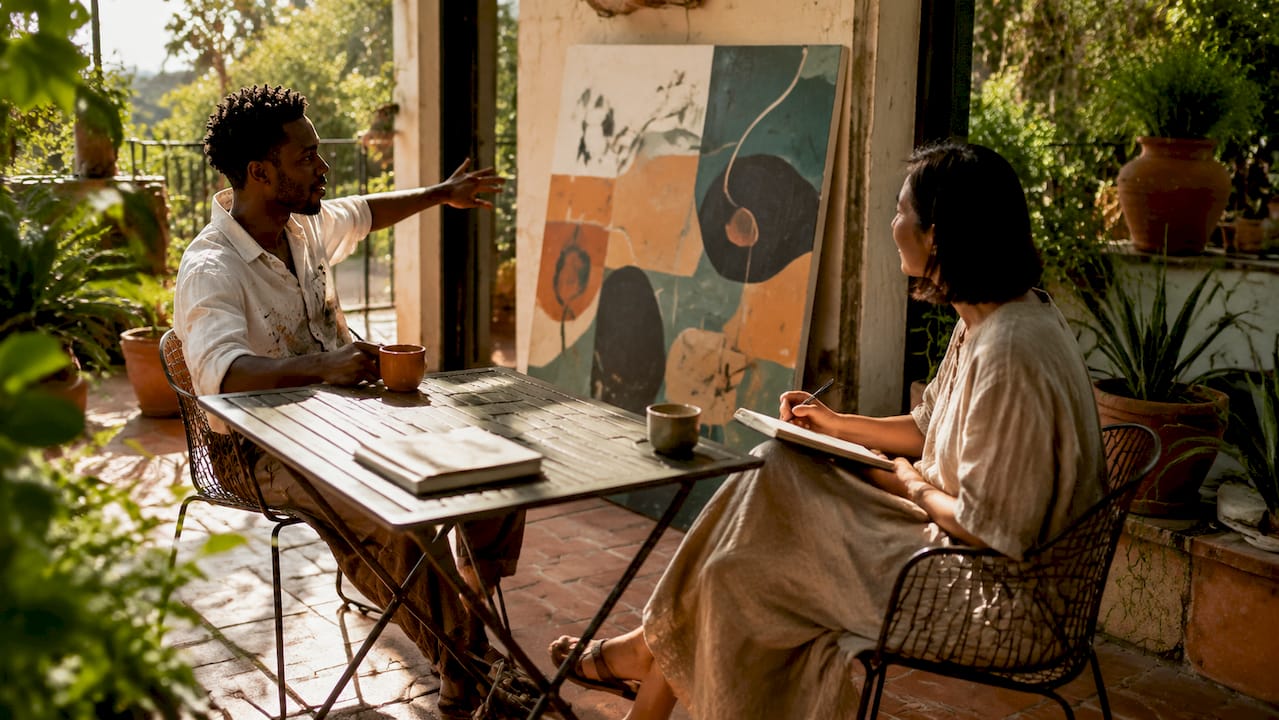
The term overlaps with two related concepts that are worth separating clearly. Commissioned art is created to a client’s brief, but the artist retains significant creative control and client collaboration may be limited. Custom art adapts an artist’s existing style or a pre-existing template to incorporate client preferences. Bespoke art goes further than both. Dream Create Collective distinguishes all three by the depth of client involvement and the degree of originality.
Because these terms are used interchangeably in marketing, clarifying the depth of collaboration before you commit to any artist is critical. Ask directly: will this piece be created from scratch based on my brief, or will it adapt an existing work or style?
| Aspect | Commissioned Art | Custom Art | Bespoke Art |
|---|---|---|---|
| Starting point | Artist’s existing practice | Existing template or style | Blank canvas, client brief |
| Client involvement | Low to moderate | Moderate | High throughout |
| Exclusivity | Varies | Partial | Fully unique |
| Typical cost | Moderate | Moderate | Higher |
| Collaboration depth | Brief only | Style adaptation | Full creative dialogue |
Pro Tip: Before agreeing to any commission, ask the artist to confirm in writing whether the piece will be created entirely from scratch or adapted from an existing work. This single question separates genuine bespoke art from custom reproductions.
What are the advantages of bespoke art for your home?
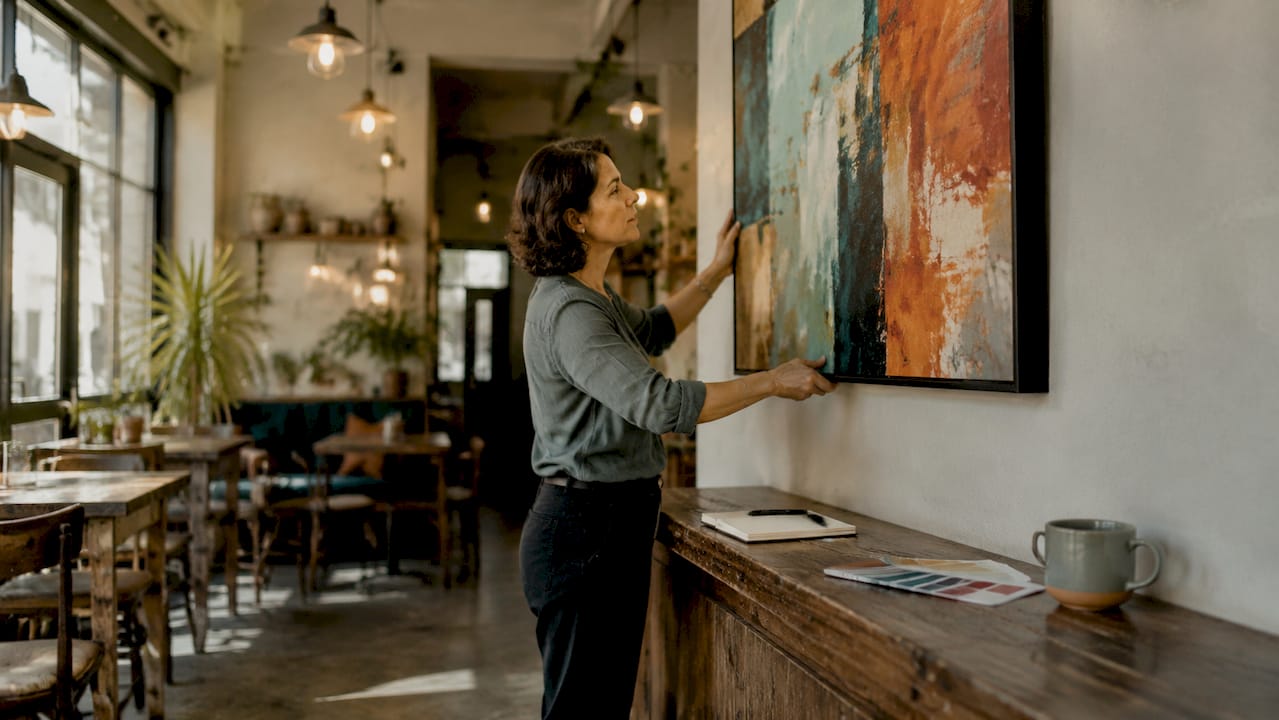
The most direct advantage of bespoke art is fit. A piece designed specifically for your wall, in your room’s exact dimensions, with your chosen colour scheme, will always integrate more naturally than anything bought off a shelf. This is not a matter of taste. It is a matter of design logic.
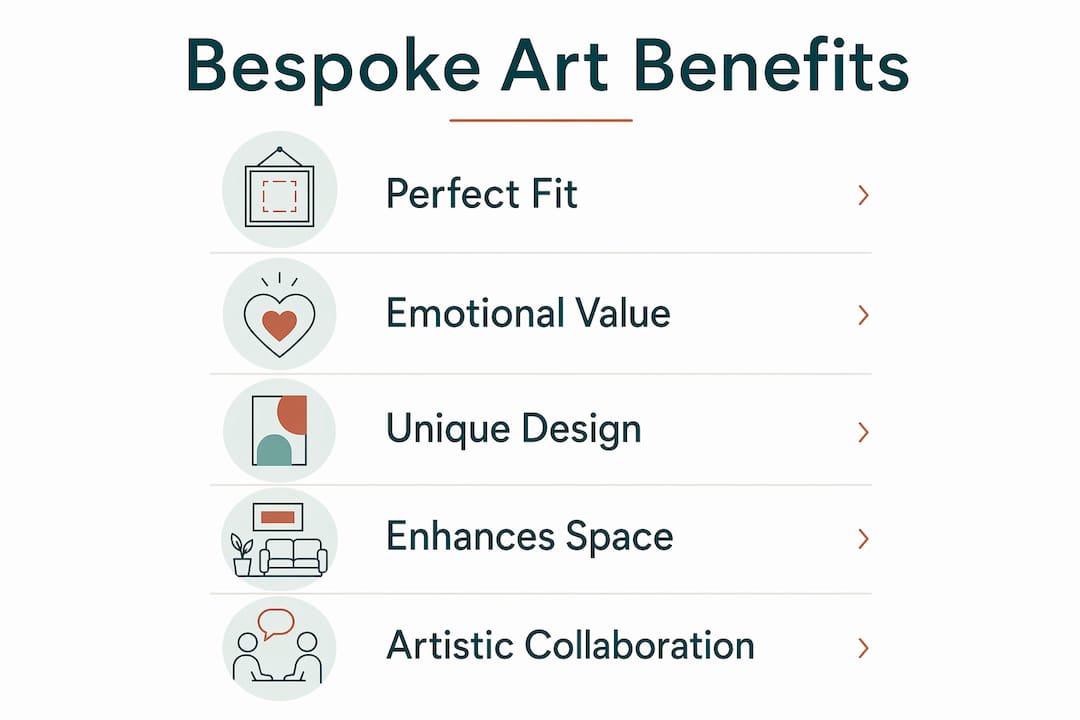
Beyond fit, there is emotional value. When you have shaped a piece from the first conversation to the final brushstroke, your relationship with it is fundamentally different from anything you could order from a catalogue. Many homeowners report that bespoke pieces become the focal point of a room precisely because they carry a personal story.
There is also a practical case for investing in bespoke artwork from a property perspective. Original, documented artwork adds character and perceived value to a home in a way that mass-produced prints simply cannot replicate.
Key advantages for homeowners and art collectors include:
- Perfect spatial fit: Size, proportion, and colour are matched to your specific room and wall.
- One-of-a-kind ownership: No other version of the piece exists anywhere in the world.
- Stronger emotional connection: You co-created it, so it reflects your personality directly.
- Higher quality materials: Bespoke artists typically use professional-grade paints, canvas, and framing.
- Provenance and documentation: Bespoke works come with records that support insurance and future resale.
- Property appeal: Original art signals quality and individuality to visitors and potential buyers alike.
How to commission bespoke artwork: step by step
Commissioning bespoke art follows a structured process. Understanding each stage before you begin prevents delays, misunderstandings, and disappointment. The following steps reflect the seven-step process outlined by artist Keili Major, adapted here for homeowners approaching the process for the first time.
-
Define your brief. Decide on the room, the wall dimensions, the dominant colours in your space, and the mood you want the piece to create. Bring reference images if you have them. The more specific your brief, the more accurately the artist can respond.
-
Research and select your artist. Look for artists whose existing portfolio demonstrates the style, medium, and scale you have in mind. Bespoke art requires genuine creative alignment between you and the artist.
-
Request a quotation. Share your brief and ask for a written quote covering the fee, timeline, revision allowances, and payment structure. Most bespoke artists work with milestone payments: a deposit upfront, a payment at concept approval, and the balance on completion.
-
Review and sign a commission agreement. A written contract protects both parties. It should cover scope, timeline, fees, revision limits, and intellectual property ownership. Sprintlaw’s guidance on commission agreements confirms that contracts reduce scope creep and define ownership clearly from the outset.
-
Approve the concept sketch. Artists pause actual painting until the client has signed off on the initial sketch or concept. This is the most important checkpoint in the entire process. Changes at sketch stage cost nothing. Changes after painting has begun can be expensive or impossible.
-
Allow time for creation and drying. Oil paintings require weeks of drying and curing time after completion before they can be safely delivered. Lead times are extended by these medium-specific requirements. Build this into your planning, especially if you have a deadline such as a house move or renovation.
-
Receive delivery and documentation. Completed bespoke works typically arrive with a certificate of authenticity detailing the title, year, dimensions, and technique. Keep this document safely. It is the foundation of your artwork’s provenance.
Pro Tip: Never skip the concept sketch stage. Even if you trust the artist completely, a signed sketch creates a shared reference point that prevents misaligned expectations when the finished piece arrives.
Key practical considerations before you commission
The commissioning process runs smoothly when both parties understand their responsibilities from the start. Several practical and legal factors are worth addressing before any money changes hands.
Written agreements are non-negotiable. A well-structured commission agreement prevents disputes and defines the scope, timeline, revision process, fee structure, and intellectual property rights. Without one, disagreements over ownership or changes become difficult to resolve.
Understand copyright. In most cases, the artist retains copyright over the work even after you purchase it. You own the physical piece, but the artist retains the right to reproduce it unless the contract explicitly transfers those rights. If exclusivity matters to you, negotiate this in writing before work begins.
Key considerations to address before commissioning:
- Timeline: Allow realistic lead time. A complex oil painting on large canvas can take three to five months from brief to delivery when drying time is included.
- Revisions: Agree on how many revision rounds are included in the fee and at which stages revisions are permitted.
- Payments: Milestone-based payments protect both parties. A typical structure is 30–50% deposit, a mid-point payment at sketch approval, and the remainder on delivery.
- Provenance documentation: Request a signed certificate of authenticity and retain all correspondence and sketches. Proper provenance enables better insurance coverage and supports resale value.
- Communication: Agree on how and how often the artist will provide progress updates. Regular check-ins reduce anxiety and catch problems early.
For a detailed walkthrough of preparing your brief and working effectively with an artist, the step-by-step guide to bespoke wall art from Frametheworld covers the residential commissioning process in practical depth.
Key takeaways
Bespoke art is the most personalised form of artwork available, created entirely from scratch through deep client-artist collaboration, and it requires structured commissioning, clear contracts, and realistic timelines to succeed.
| Point | Details |
|---|---|
| Bespoke art definition | Artwork created entirely from scratch to a specific client’s brief, not adapted from existing work. |
| Bespoke vs custom vs commissioned | Bespoke involves the deepest client collaboration; commissioned and custom art offer less creative input. |
| Key advantages | Perfect spatial fit, one-of-a-kind ownership, stronger emotional connection, and documented provenance. |
| Commissioning process | Follow seven clear steps from brief to delivery, with sketch approval as the most critical checkpoint. |
| Legal and practical protection | Always use a written contract covering scope, revisions, payments, copyright, and delivery timelines. |
Why bespoke art changed how i think about home decoration
I have spent years writing about art and interior decoration, and the single most consistent mistake I see homeowners make is treating wall art as an afterthought. They furnish the room, choose the paint, and then look for something to fill the space. Bespoke art inverts that entirely. You start with the art and build the room’s atmosphere around it.
The collaboration process itself is something most people underestimate. Working with an artist from a blank brief to a finished piece is genuinely rewarding. You learn something about your own taste that browsing an online catalogue never reveals. The conversations you have during the sketch stage, where you push back on a colour or request a different composition, are where the real value is created.
The pitfall I see most often is impatience. Homeowners agree to a commission and then expect delivery within a few weeks. Oil paintings on large canvases do not work that way. The drying and curing process alone can add a month to the timeline. Rushing an artist at this stage produces inferior results. Build the time in from the start and treat it as part of the experience.
My honest advice: invest as much time in selecting the right artist as you do in defining the brief. The right commission will outlast every other decision you make about that room.
— Lennard
Discover hand-painted and bespoke art at Frametheworld
Frametheworld offers a curated selection of handmade oil paintings and hand-painted wall art for homeowners who want something genuinely original. Whether you are looking for a ready-to-hang piece or want to explore a bespoke commission tailored to your space, the collections span a wide range of styles, sizes, and formats. The Wabi Sabi wall art collection is particularly well suited to homeowners seeking textured, abstract pieces with a handcrafted quality. Every artwork is selected for its quality and character, making Frametheworld a practical starting point for anyone serious about personalised home decoration.
FAQ
What is the bespoke art definition in simple terms?
Bespoke art is artwork created entirely from scratch to suit one specific client’s tastes, space, and requirements. Nothing is pre-made or adapted from an existing template.
How does bespoke art differ from custom art?
Custom art adapts an artist’s existing style or template to include client preferences. Bespoke art starts from nothing and is built entirely around the client’s brief through deep collaboration.
How long does it take to commission a bespoke painting?
Timelines vary by medium and complexity, but oil paintings can take three to five months from brief to delivery. Drying and curing time after completion adds several weeks beyond the creation phase.
Do i own the copyright to my bespoke artwork?
You own the physical piece, but the artist typically retains copyright unless the commission contract explicitly transfers those rights. Always clarify and agree on intellectual property terms in writing before work begins.
Why is a certificate of authenticity important for bespoke art?
A certificate of authenticity documents the title, year, dimensions, and technique of the work. It forms the foundation of the artwork’s provenance, which supports insurance coverage and future resale value.

Laat een reactie achter
Deze site wordt beschermd door hCaptcha en het privacybeleid en de servicevoorwaarden van hCaptcha zijn van toepassing.