
TL;DR:
- Art customisation involves actively shaping artwork to reflect individual tastes, spaces, and identities, moving beyond fixed prints. It encompasses methods from traditional commissions to AI-assisted workflows, emphasizing detailed briefs and visual references. This personalized approach enhances wellbeing, fosters emotional connection, and adds value through active participation and trust.
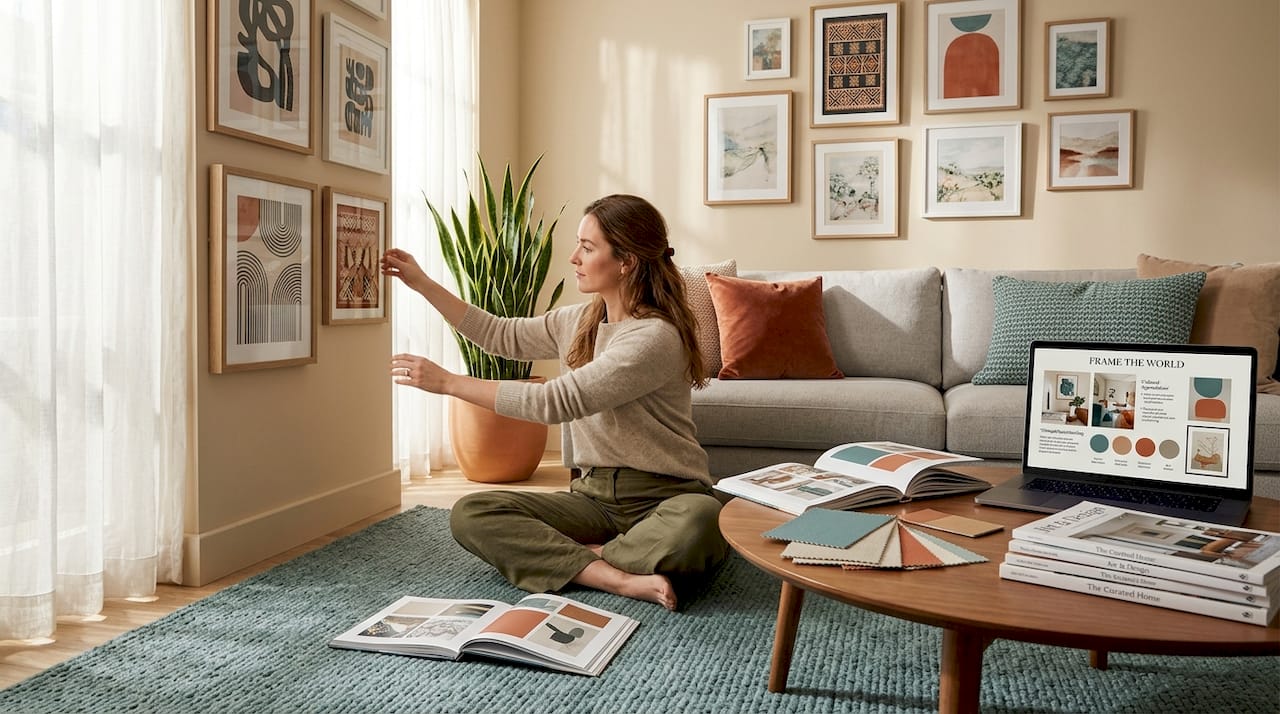
Art customisation is the process of creating or adapting artwork to reflect the specific tastes, identity, and spatial needs of an individual or organisation. Where a standard print offers a fixed image, customised art gives you direct input over subject matter, colour palette, scale, and style. The result is a piece that belongs to a particular space rather than simply occupying it. Platforms like Frametheworld and companies such as Minted are responding to growing demand for personalised art options that combine human artistry with flexible, technology-assisted production.
What is art customisation and how does it differ from standard art?
Art customisation is defined as the deliberate modification or creation of artwork according to a buyer’s stated preferences, as opposed to selecting from a fixed catalogue. The distinction matters because it shifts the creative relationship. You move from passive consumer to active participant in the work’s development.
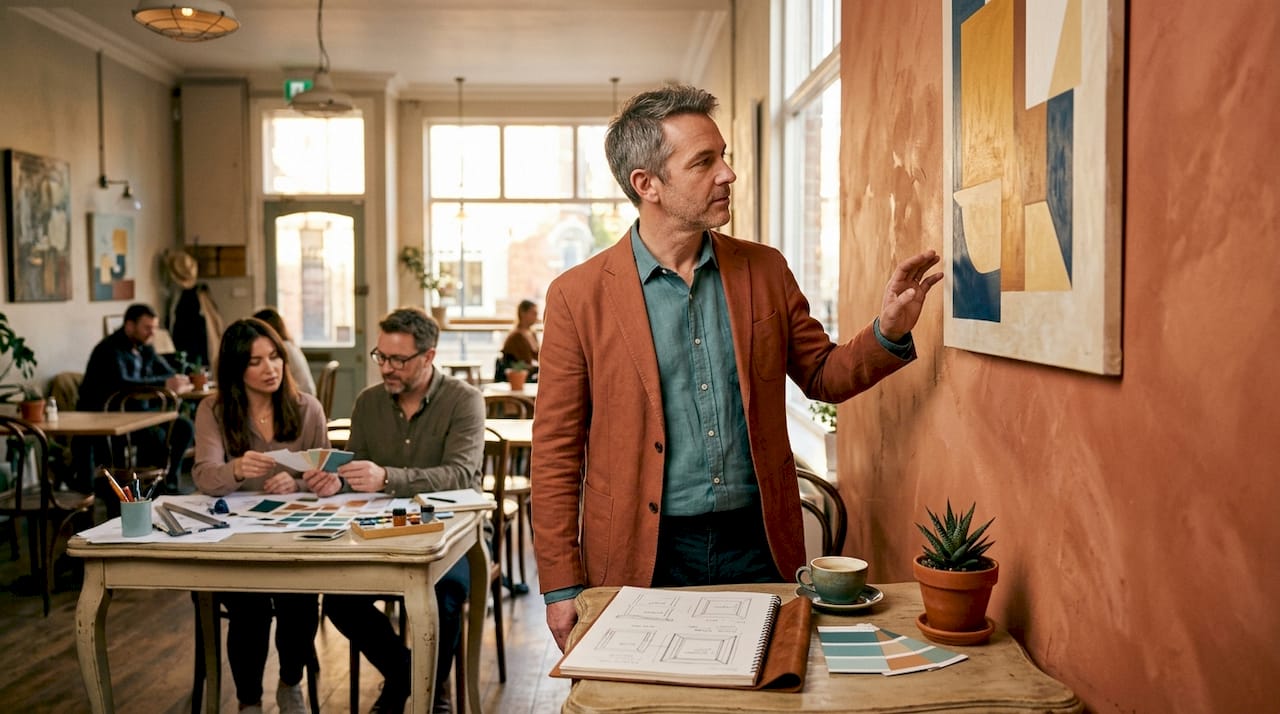
Bespoke art is commissioned entirely from scratch, typically through a direct brief to an artist. Custom art adapts an existing work or style to new specifications, such as changing the colour scheme or adding a personal element. Personalised art sits closer to the consumer end, often involving name additions, date inscriptions, or format changes to a pre-existing design. Understanding these three categories helps you decide which level of involvement suits your project, your budget, and your intended space.
The market is shifting towards hybrid models. Customers increasingly seek high-quality, human-created artwork combined with greater personalisation options. This demand is driving both traditional studios and digital platforms to offer more flexible co-creation services.
What processes and techniques are involved in art customisation?
Art customisation techniques range from traditional artist commissions to AI-assisted generation workflows, and the right approach depends on your goals, timeline, and budget.
Traditional commissioning remains the most direct route to a truly bespoke piece. You brief an artist with references, mood boards, and spatial measurements. The artist produces initial sketches, you provide feedback, and the work evolves through revision cycles until it meets your brief. This process works particularly well for large-scale commercial installations, portrait commissions, and spaces where a handmade quality is non-negotiable.
AI-assisted customisation is the faster-growing method. Professional AI artists in 2026 use style templates and ControlNet to maintain visual coherence across a body of work, avoiding the inconsistency known as style drift. Creating consistent AI art requires prompt templates with fixed style modifiers and trained style layers such as LoRA to preserve a coherent aesthetic across multiple images. Minted is currently developing an AI tool that allows customers to swap specific elements within existing artworks while preserving the original artist’s style, a project that began in 2026 with no confirmed launch date.
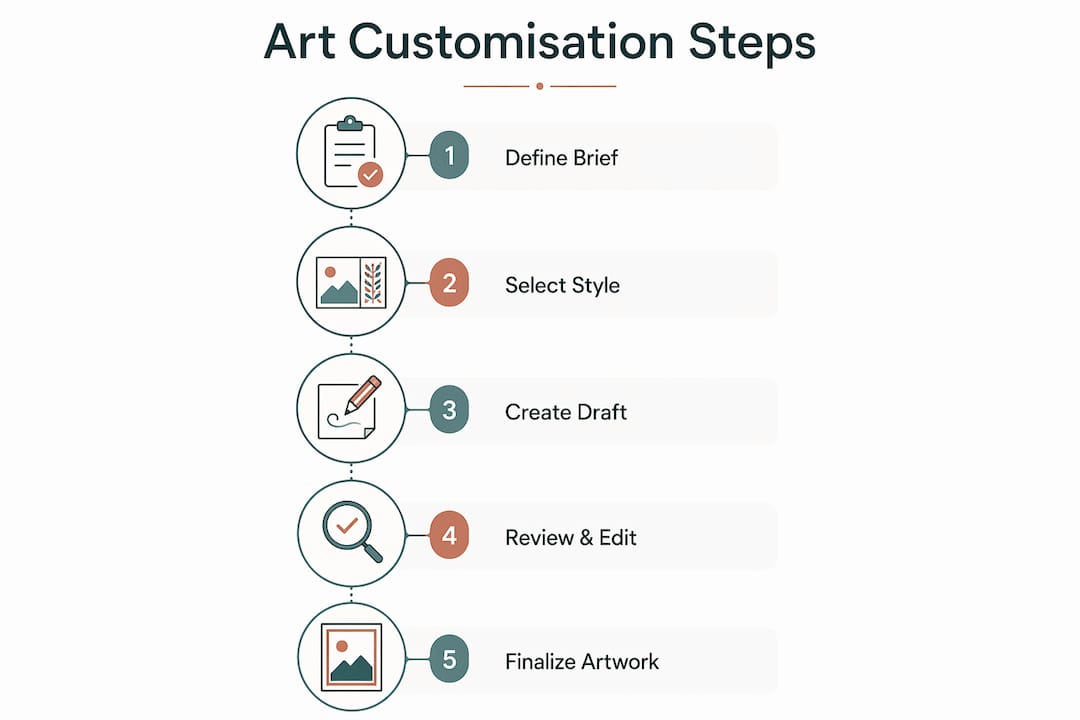
The key steps in a typical art customisation process are:
- Define your brief. Specify the subject, mood, colour palette, dimensions, and intended location before approaching any artist or platform.
- Select your method. Choose between a human artist, an AI-assisted platform, or a hybrid service depending on your budget and the level of originality required.
- Provide style references. Share images, swatches, or examples of work you admire. Visual references reduce misinterpretation and speed up the revision process.
- Review and iterate. Most quality services offer at least two rounds of revisions. Use them to refine composition, tone, and detail.
- Approve and produce. Once the design is confirmed, the work is produced in your chosen format, whether canvas, print, or digital file.
Pro Tip: When briefing an artist or using an AI customisation platform, always supply three to five visual references alongside your written description. Written briefs alone leave too much room for interpretation, and visual anchors cut revision cycles significantly.
How does art customisation enhance wellbeing and space aesthetics?
The psychological case for personalised art goes well beyond preference. Scientific research now supports what interior designers have long observed: the right artwork changes how a space feels and how people function within it.
A 2025 study using VR and EEG technology found that nature-themed art reduces systolic blood pressure and enhances brain alpha wave activity, producing restorative effects comparable to direct exposure to natural environments. This is a significant finding for anyone designing a home office, a clinical waiting room, or a hospitality space. The art on the wall is not decorative background. It is an active contributor to the physiological state of the people in the room.
Two theoretical frameworks explain why this happens. Attention Restoration Theory (ART) holds that natural environments, and by extension nature-themed artworks, replenish directed attention by engaging involuntary fascination. Stress Reduction Theory (SRT) proposes that positive emotional responses to natural scenes reduce physiological stress markers. Both frameworks are supported by neurobiological data from the 2025 study, which recorded measurable changes in brain activity and cardiovascular response.
“Nature-themed artworks function as natural analogues in biophilic design, eliciting psychological benefits such as fascination and positive emotional responses aligned with Attention Restoration Theory and Stress Reduction Theory.”
Biophilic design, which integrates natural elements into built environments, increasingly uses custom art as a practical tool. A bespoke landscape painting or an abstract work drawing on organic forms and earth tones can serve the same restorative function as a living plant wall, at a fraction of the cost and maintenance. The mood-shaping power of art in a room is not a matter of taste alone. It is a measurable psychological effect.
| Benefit | Mechanism | Application |
|---|---|---|
| Reduced stress | SRT: positive emotional response to natural imagery | Workplaces, healthcare settings, home offices |
| Improved attention | ART: involuntary fascination restores directed focus | Study rooms, creative studios, open-plan offices |
| Enhanced mood | Biophilic analogue effect from organic forms and colour | Living rooms, hospitality spaces, retail environments |
| Stronger identity | Personalised content reinforces self-expression | Private homes, branded commercial interiors |
What are the benefits and value customers gain from art customisation?
The value of customised art is not contained in the finished object alone. Research shows that active participation in design enhances perceptions of utilitarian value, uniqueness, and self-expressiveness, increasing both satisfaction and the likelihood of repeat purchase. The process of co-creating a piece makes it feel more meaningful than a work selected from a shelf.
This effect is well documented in behavioural research. When customers make real decisions during the customisation process, such as choosing a colour palette, approving a composition, or selecting a format, they develop a sense of authorship. That sense of authorship translates directly into perceived product value. The piece becomes an expression of identity rather than a purchase.
Trust in the vendor is the critical enabler. Privacy, security, and the fulfilment of stated promises are the factors that motivate customers to engage deeply in online co-creation. A platform that is transparent about its process, communicates clearly at each stage, and delivers what it commits to will generate significantly higher engagement than one that treats customisation as a checkbox feature.
The practical benefits of art customisation for businesses are equally concrete:
- Brand coherence. Custom artwork aligned with a brand’s colour palette and visual language creates a more consistent environment across multiple locations or touchpoints.
- Client and employee experience. Research-backed restorative art choices in offices and client-facing spaces contribute to measurable improvements in wellbeing and perceived quality.
- Differentiation. Bespoke art signals investment and attention to detail in a way that stock imagery cannot replicate.
- Long-term value. A commissioned work does not date in the way that trend-driven décor does. It retains relevance because it was designed for a specific context.
Pro Tip: Before selecting a customisation platform or commissioning an artist, check whether they offer a documented revision process and clear ownership terms. Platforms with transparent workflows consistently produce better outcomes because both parties understand expectations from the outset.
How to customise art for your space: practical considerations
Effective art customisation starts before you speak to an artist or open a platform. The quality of your brief determines the quality of the result.
A strong creative brief covers five elements: the intended location and its dimensions, the dominant colours already present in the space, the mood or atmosphere you want to create, any subject matter preferences or exclusions, and the format you require, whether canvas, framed print, or unframed sheet. Businesses should also include brand guidelines and any compliance considerations for public-facing spaces.
When selecting between customisation options, the following comparison helps clarify which approach fits different needs:
| Option | Best for | Typical timeline | Cost range |
|---|---|---|---|
| Bespoke commission | Unique, one-off pieces with full creative input | 4 to 12 weeks | Higher investment |
| Custom adaptation | Modifying an existing work to fit your space or palette | 1 to 3 weeks | Mid-range |
| Personalised print | Adding names, dates, or minor edits to a fixed design | 2 to 5 days | Lower cost |
| AI-assisted custom | Scalable personalisation with style consistency tools | Hours to days | Variable |
Style references are the single most effective tool for achieving a coherent result. Whether you are working with a human artist or an AI customisation workflow, providing a consistent set of visual anchors keeps the output aligned with your vision. Collect references from existing art you own, interiors you admire, and colour swatches from your space. The more specific your inputs, the less room there is for the result to miss the mark.
For businesses managing multiple locations or a large-scale interior project, creative ways to personalise artwork at scale include developing a style guide for commissioned works, using a single artist or platform across all sites for visual consistency, and building a small library of approved style references that any future commissions must reference.
Key takeaways
Art customisation delivers the most value when the buyer participates actively in the creative process, selecting a method and brief that matches both the space and the intended psychological effect.
| Point | Details |
|---|---|
| Definition is precise | Art customisation means adapting or creating artwork to specific preferences, distinct from bespoke and personalised options. |
| Co-creation adds value | Active participation in design increases perceived uniqueness, satisfaction, and emotional connection to the finished work. |
| Nature-themed art has measurable effects | Research shows reduced blood pressure and improved attention from nature-themed custom art in indoor spaces. |
| Trust drives engagement | Transparent platforms and clear revision processes produce better outcomes and higher customer satisfaction. |
| Brief quality determines results | A detailed creative brief covering location, colour, mood, and format is the most reliable predictor of a successful commission. |
Art customisation in practice: what I have learned
I have spent years watching clients approach art customisation with the same misconception: that the final piece is the product. It is not. The process is the product. The clients who invest time in their brief, who engage genuinely with revision rounds, and who treat the artist or platform as a collaborator rather than a supplier consistently end up with work that still feels right five years later.
The AI question is real and worth addressing directly. AI-assisted customisation is not a threat to quality. It is a tool, and like any tool, its output reflects the skill of the person using it. The challenge is style consistency, and the platforms that have solved this problem, through trained style models and structured workflows, are producing work that holds up alongside traditionally commissioned pieces. What AI cannot replicate is the depth of a brief built on genuine self-knowledge. That remains the human contribution.
The psychological evidence on nature-themed art has changed how I think about customisation for commercial clients. Choosing art for a workplace is not a décor decision. It is a decision about the cognitive and emotional state of the people who work there. That reframes the conversation entirely, and it gives customisation a business case that goes beyond aesthetics.
The role of art in home style and in commercial spaces is increasingly understood through this lens. Personalised art that reflects the identity of the people in a space, and that draws on natural forms and restorative imagery, is not an indulgence. It is a considered investment in environment.
— Lennard
Explore custom art and bespoke collections at Frametheworld
Frametheworld offers a range of collections that demonstrate what art customisation looks like in practice. The Wabi Sabi wall art collection brings hand-painted texture and organic imperfection to interiors where a bespoke, considered aesthetic matters. For spaces that call for bold colour and graphic energy, the Pop Art collection offers vibrant, hand-painted works that can be adapted to suit specific dimensions and colour schemes. Both collections are available to private customers and professional interior clients, with customisation options to fit the brief. Browse the full range at Frametheworld to find the right starting point for your space.
FAQ
What is the definition of art customisation?
Art customisation is the process of creating or adapting artwork to match a buyer’s specific preferences, including subject matter, colour, scale, and format. It differs from standard art purchasing in that the buyer participates actively in shaping the final piece.
How does art customisation differ from personalised art?
Personalised art typically involves minor modifications to an existing design, such as adding a name or date. Art customisation covers a broader range of changes, including full commissions, style adaptations, and co-created works built from a detailed brief.
What are the psychological benefits of customised art?
Research shows that nature-themed custom art reduces systolic blood pressure and enhances brain alpha wave activity, supporting relaxation and focus. These effects are explained by Attention Restoration Theory and Stress Reduction Theory, both of which link natural imagery to measurable stress reduction.
How do AI tools fit into art customisation?
AI-assisted customisation uses style templates, ControlNet, and trained style models such as LoRA to produce personalised artwork at scale while maintaining visual consistency. Platforms like Minted are developing tools that let customers modify elements of existing artworks without losing the original artist’s style.
How do I start the art customisation process?
Begin with a detailed creative brief that covers the intended location, dimensions, colour palette, mood, and format. Then select a method, whether a human artist, an AI-assisted platform, or a hybrid service, based on your timeline, budget, and the level of originality you require.


Laat een reactie achter
Deze site wordt beschermd door hCaptcha en het privacybeleid en de servicevoorwaarden van hCaptcha zijn van toepassing.