

TL;DR:
- Effective art curation involves selecting artworks that tell a cohesive, emotionally engaging story aligned with the space’s purpose. Proper layout, lighting, framing, and active collection management are essential to create visually appealing experiences and preserve artwork value over time. Small decisions, such as wall color and precise hanging measurements, significantly influence the overall impact of a curated space.
Art curation best practices are the methods used to select, arrange, and present artwork so it creates coherent, emotionally resonant experiences in any space. Effective curation balances artistic sensitivity with organisational skill, crafting a narrative while managing practical logistics. Whether you are arranging a residential living room or a corporate reception, the same core principles apply: thematic focus, spatial layout, lighting, framing, and ongoing collection management. This guide covers each practice in depth, with actionable advice for art enthusiasts, interior designers, and collectors working in 2026.
1. What are the fundamental art curation best practices for selecting artworks?
Artwork selection is the foundation of every curated space. Artworks should form coherent, emotionally engaging narratives that resonate with the people who will live or work in the space. Without that narrative thread, even expensive pieces feel disconnected.
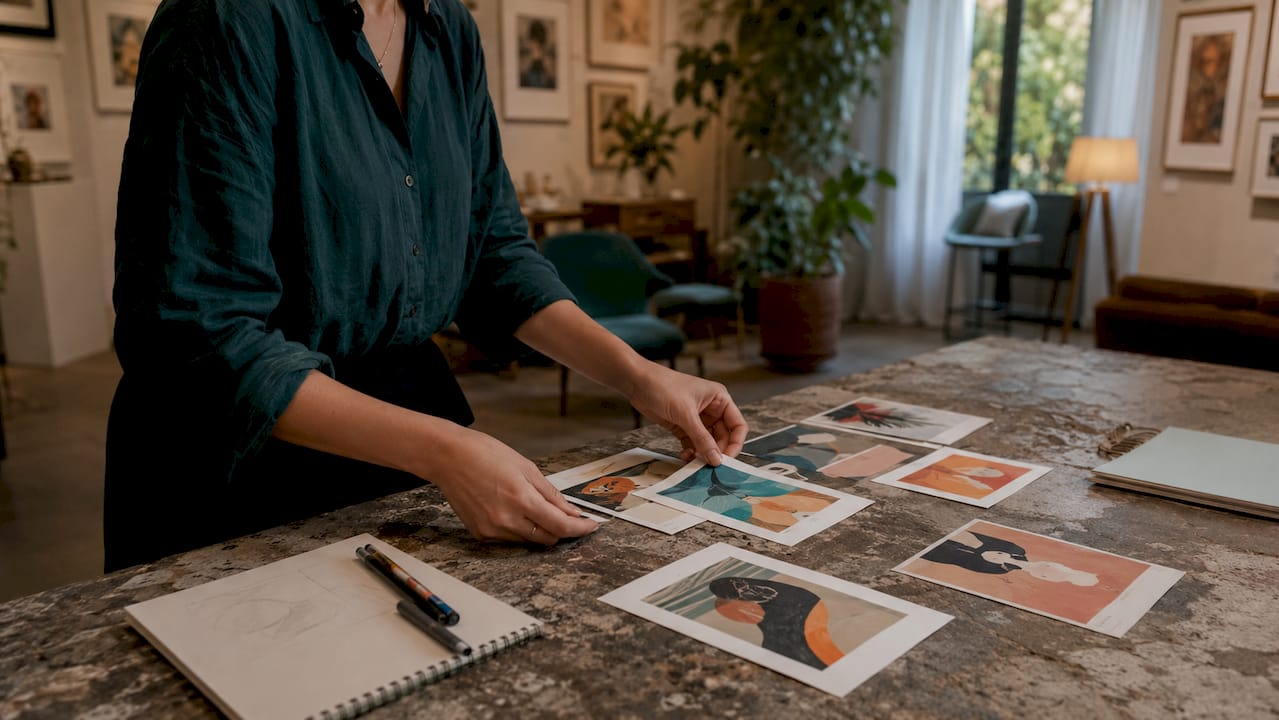
Start by defining a clear thematic focus. A theme does not need to be literal. It can be a mood, a colour palette, a cultural reference, or a period. Once you have a theme, every selection decision becomes easier because you have a filter.
Consider the balance between established and emerging artists. Effective art curation uses established artists for credibility and emerging voices for fresh perspectives. In practice, this means pairing a well-known print with a lesser-known original to create visual tension and conversation.
Key selection criteria to apply:
- Medium and scale: Does the piece suit the wall dimensions and room proportions?
- Artist reputation: Does the work carry provenance or critical recognition relevant to your audience?
- Thematic relevance: Does it reinforce or productively challenge the narrative you are building?
- Condition and authenticity: Is the work in a state suitable for long-term display?
- Audience resonance: Will the people in this space connect with it emotionally or intellectually?
Use the art selection checklist from Frametheworld to run through these criteria systematically before committing to a purchase.
Pro Tip: Match artwork selection to the function of the space. A boardroom benefits from authoritative, considered works. A bedroom calls for pieces that are calming and personal. The function shapes the emotional register you are curating for.
2. How to plan and organise an effective art layout
Layout determines how a viewer moves through and experiences a space. Gallery-style arrangements differ from residential ones, but the underlying logic is the same: guide the eye, create rhythm, and avoid visual clutter.
Follow this step-by-step process for planning your layout:
- Map the wall space. Measure every wall you intend to use, noting doors, windows, and light switches that interrupt the surface.
- Define your anchor piece. Choose the largest or most visually dominant work first. Every other piece relates to it.
- Create paper templates. Cut paper to the exact dimensions of each frame and tape them to the wall before drilling. This lets you test arrangements without damage.
- Establish a sight line. The centre of most artworks should sit at approximately 145–150 cm from the floor, which aligns with average eye level.
- Set your spacing. Balanced spacing of 3–8 cm between frames gives a professional gallery appearance. Tighter spacing reads as a deliberate cluster; wider spacing reads as individual statements.
- Transfer hanging measurements precisely. Measure the distance from the top of each frame to its hanging point, then transfer that measurement to your paper template before marking the wall. This eliminates multiple nail holes.
- Step back and review. Assess the arrangement from the room’s natural entry point, not from directly in front of the wall.
| Layout approach | Best suited to | Key consideration |
|---|---|---|
| Salon-style grid | Formal living rooms, offices | Consistent spacing and alignment |
| Organic cluster | Relaxed residential spaces | Varied sizes, unified by theme or colour |
| Single statement piece | Minimalist or commercial interiors | Scale and placement precision |
| Linear row | Corridors, stairwells | Eye-level consistency throughout |
Wall colour acts as a wayfinding device, guiding viewers through a space without explicit signage. A deeper tone behind a cluster of works draws the eye there first. A lighter tone creates breathing room around a single statement piece.
Pro Tip: Before you pick up a drill, live with your paper templates for 24 hours. You will notice things at different times of day, under different light, that you miss in the first five minutes.
3. What role does lighting play in art curation?
Lighting is the single most underestimated variable in art display. Lighting sets the atmosphere for a space, highlights artworks, and maintains viewer comfort. Poor lighting flattens a collection; good lighting transforms it.
The main lighting types for art display are:
- Spotlights and track lighting: Directional and adjustable, these are the standard choice for gallery-style residential and commercial spaces. Position them at a 30-degree angle from the wall to reduce glare on glazed frames.
- Picture lights: Mounted directly onto or above the frame, these create an intimate, traditional feel. They work particularly well for oil paintings and large-format prints.
- Natural light: Desirable for warmth and colour accuracy, but requires careful management. Direct sunlight causes fading. Use UV-filtering glazing or position works away from south-facing windows.
- Ambient LED strips: Used behind frames or along skirting, these add depth and drama without directing light onto the artwork itself.
Colour temperature matters more than most people realise. Warm white light (2700–3000K) flatters warm-toned works such as landscapes and portraits. Cool white light (4000K and above) suits contemporary abstract and photographic prints. Mixing temperatures in the same room creates visual confusion.
Managing light levels carefully prevents art damage. UV exposure and heat from halogen fittings degrade pigments over time. LED alternatives produce minimal UV and heat, making them the preferred choice for long-term collection care.
For commercial spaces, consult a lighting designer before installation. The investment pays back in the quality of the viewing experience and in the preservation of the works themselves.
4. How to choose framing and mounting styles that enhance artwork
Framing is not a finishing touch. It is a curatorial decision that affects how a work is read, how long it lasts, and how well it fits its environment. The expert guide to framing art from Frametheworld covers this in detail, but the core principles are worth understanding here.
Key framing considerations:
- Mix materials and finishes. Mixing frame materials, colours, and sizes adds depth and visual interest to a curated display. A combination of natural wood, brushed metal, and painted wood frames reads as considered rather than mismatched.
- Use mounts for a professional finish. A white or off-white mount creates visual breathing room between the image and the frame edge. It also adds perceived value to the work.
- Vary frame proportions. Thin frames suit contemporary and photographic works. Deeper, chunkier frames suit oil paintings and textured originals. Matching every frame to the same profile flattens the visual hierarchy.
- Prioritise conservation. Use acid-free mounts and UV-protective glazing for any work you intend to keep long-term. Standard glass yellows and causes chemical damage over years.
- Match frames to room décor. A room with warm timber furniture calls for warmer frame tones. A room with industrial or Scandi-style fittings suits raw metal or simple black frames.
Pro Tip: When curating a gallery wall with multiple frames, choose one unifying element across all frames, whether that is a shared colour, a shared material, or a shared finish. One point of unity lets everything else vary without the wall looking chaotic.
5. How to manage evolving art collections for residential and commercial spaces
A curated collection is not static. Collection management includes maintaining detailed records, condition tracking, and organised rotation to keep displays dynamic and preserve value. This applies whether you own ten prints or a hundred originals.
Best practices for ongoing collection management:
- Document everything. Record each work’s title, artist, medium, dimensions, purchase date, provenance, and condition at acquisition. A simple spreadsheet works for small collections. Larger collections benefit from dedicated software such as Artwork Archive or Collector Systems.
- Track condition regularly. Check for fading, moisture damage, or frame deterioration at least twice a year. Catching problems early prevents costly restoration.
- Rotate displayed works. Refreshing what is on the wall every six to twelve months keeps the space feeling alive and reduces light exposure for individual pieces.
- Maintain narrative coherence during changes. When you introduce a new work, consider how it affects the existing story. Removing one piece can unbalance a carefully built arrangement.
- Arrange insurance and valuation. Works of significant value should be listed on a specialist art insurance policy, not a standard home contents policy. Get professional valuations updated every three to five years.
| Management task | Frequency | Why it matters |
|---|---|---|
| Condition check | Every 6 months | Catches deterioration before it becomes irreversible |
| Rotation of displayed works | Every 6–12 months | Reduces light damage and refreshes the space |
| Provenance and record update | At each acquisition | Protects value and supports insurance claims |
| Professional valuation | Every 3–5 years | Reflects market changes and informs insurance cover |
For commercial clients, curating art for commercial spaces requires additional considerations around public liability, installation standards, and brand alignment. Frametheworld’s commercial guide addresses these directly.
Key takeaways
Effective art curation combines thematic selection, precise layout, considered lighting, appropriate framing, and active collection management to create spaces that engage viewers and preserve value over time.
| Point | Details |
|---|---|
| Selection drives narrative | Choose artworks that form a coherent emotional story, not just a visually pleasing group. |
| Layout precision matters | Use paper templates and measure hanging points before drilling to avoid costly mistakes. |
| Lighting transforms display | Match colour temperature to artwork tone and use LED fittings to prevent long-term damage. |
| Framing is a curatorial choice | Mix materials and use acid-free mounts to add depth and protect works for the long term. |
| Collection management preserves value | Document, rotate, and insure your collection systematically to maintain its condition and worth. |
What I have learned from years of watching spaces come alive
The most common mistake I see is treating curation as decoration. People choose a piece because it matches the sofa. They hang it at whatever height feels right in the moment. They never think about the light hitting it at 3pm in january when the sun comes through the west window. Then they wonder why the room never quite feels finished.
The truth is that the smallest decisions carry the most weight. Wall colour behind a cluster of works is not a background choice. It is an active curatorial tool. Wall colour guides viewers through a space as effectively as any signage, and most people in residential settings never use it intentionally.
I have also seen collectors spend thousands on original works and then hang them with the wrong hardware, at the wrong height, under the wrong light. The art suffers for it. Precise measurement of hanging points, as simple as it sounds, is one of the most overlooked steps in the entire process. Getting it right the first time saves the wall and saves the work.
My honest advice: start with the narrative, not the aesthetics. Ask what you want someone to feel when they stand in that room. Then work backwards from that feeling to select, arrange, and light accordingly. Curation is not about filling walls. It is about shaping experience. When you approach it that way, even a modest collection of prints can stop someone in their tracks.
— Lennard
Discover curated art collections at Frametheworld
The principles in this guide come to life when you have the right works to start with. Frametheworld offers collections built around distinct curatorial themes, making it easier to apply these strategies from the first piece you choose. The Wabi Sabi wall art collection brings hand-painted texture and considered imperfection to residential and commercial spaces, ideal for organic, layered arrangements. For bolder, high-contrast displays, the Pop Art collection delivers vibrant, statement-ready pieces that anchor gallery walls with confidence. Both collections are available in multiple sizes and formats, with bespoke options for larger projects.
FAQ
What is the first step in art curation?
Define a clear thematic or emotional focus before selecting any works. Every subsequent decision, from layout to framing, should serve that central idea.
How far apart should frames be on a gallery wall?
Spacing of 3–8 cm between frames gives a professional, balanced appearance. Tighter spacing creates a deliberate cluster effect; wider spacing lets each piece read as an individual statement.
What lighting is best for displaying artwork at home?
LED spotlights positioned at a 30-degree angle from the wall reduce glare and produce minimal UV and heat, making them the best choice for long-term art display. Match colour temperature to the tone of your works: 2700–3000K for warm pieces, 4000K for contemporary or photographic prints.
How often should I rotate displayed artworks?
Rotating works every 6–12 months keeps a space feeling fresh and reduces cumulative light exposure on individual pieces. Document condition before and after each rotation to track any deterioration.
Do I need specialist insurance for an art collection?
Works of significant value require a specialist art insurance policy. Standard home contents policies rarely cover art at full market value, and they seldom account for provenance or condition-related claims.


Laat een reactie achter
Deze site wordt beschermd door hCaptcha en het privacybeleid en de servicevoorwaarden van hCaptcha zijn van toepassing.