
TL;DR:
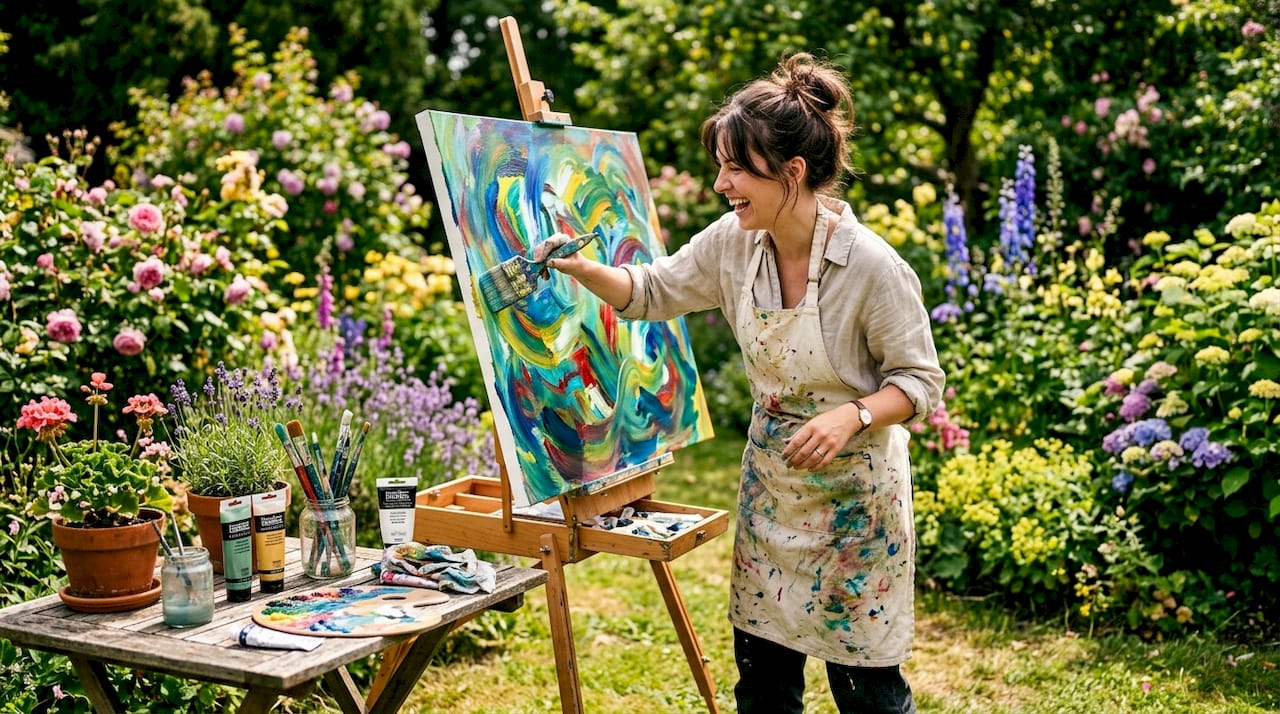
- Abstract art allows beginners to express emotion through color and shape without needing traditional skills. Acrylic paint, limited color palettes, and layered techniques help create confident, spontaneous artworks. Displaying paintings at home builds confidence and understanding of composition and personal style.
Abstract art is the practice of expressing emotion, mood, and ideas through colour, shape, line, and texture without attempting to replicate reality. That single distinction makes abstract art for beginners far more accessible than most people expect. You do not need traditional drawing skills or years of formal training. What you need is a willingness to experiment, a basic set of materials, and an understanding that abstract art prioritises visual sensation over accurate representation. Acrylic paint is the recommended starting medium, and a palette knife, a few brushes, and an inexpensive canvas are enough to begin.
1. What is abstract art for beginners?
Abstract art is defined by what it leaves out: recognisable objects, accurate proportions, and literal scenes. Instead, it communicates through the direct relationship between colour, shape, and mark. This is not a lesser form of art. Abstract painting demands careful observation of how colours interact, how shapes create tension or harmony, and how a single brushstroke can shift the mood of an entire composition.
The most common misconception is that abstract art requires no skill. Art educators consistently correct this. The skill is simply organised differently. Rather than learning to draw a face accurately, you learn to read a composition for balance, rhythm, and contrast. That shift in focus is actually liberating for beginners, because there is no single “correct” outcome to measure yourself against.
2. Essential materials to start painting abstractly
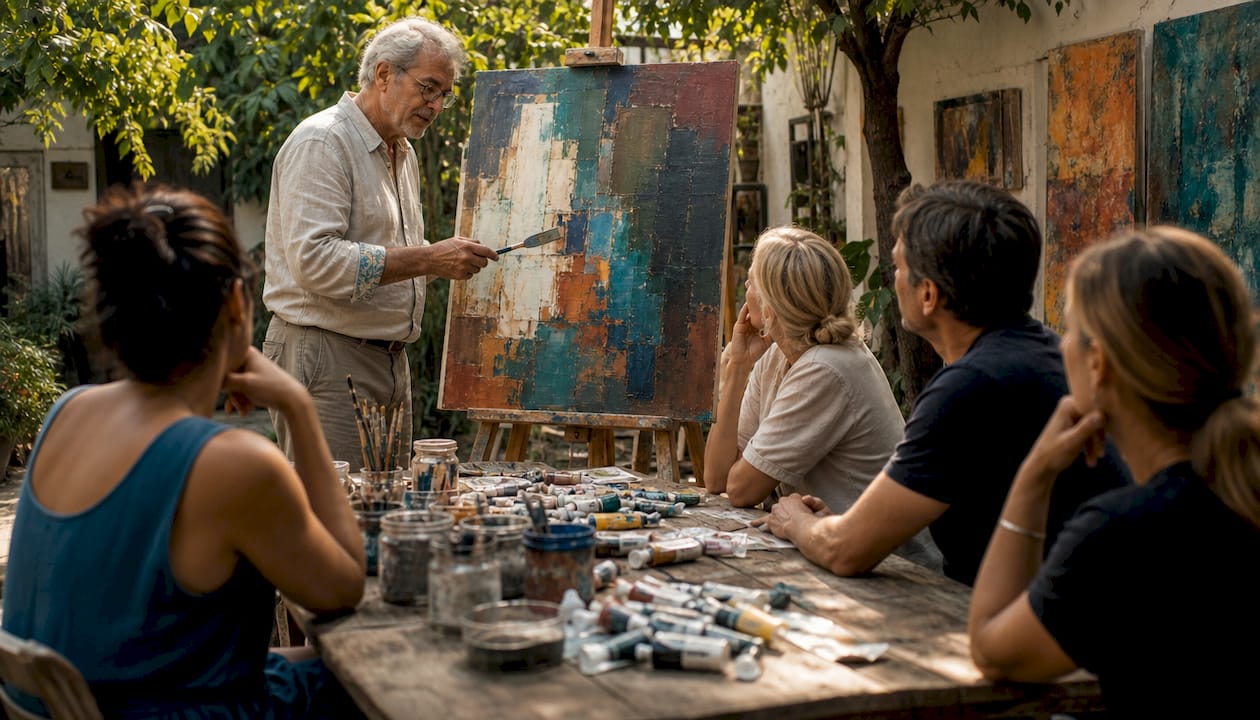
Acrylic paint is recommended for beginners because it dries quickly, cleans up with water, and works on almost any surface. Fast drying times mean you can layer colours within minutes rather than waiting days, which keeps momentum going during a session.
A basic starter kit needs the following:
- Canvases or heavy paper (300gsm watercolour paper works well)
- A palette knife for spreading, pressing, and scraping paint
- Flat brushes in two or three sizes for broad strokes and edges
- A mop brush for soft blending and washes
- Sponges for texture and dabbing effects
- A plastic plate or palette for mixing colours
- White paint in a large quantity, as it is used constantly
Using inexpensive surfaces like heavy paper or cardboard during early practice reduces the pressure of treating every piece as a finished work. When the surface costs almost nothing, you paint more freely.
Pro Tip: Invest in a decent quality mop brush. Cheap mop brushes shed bristles into wet paint and ruin the surface. Inexpensive flat brushes, however, perform well enough for general use.
3. Step-by-step beginner abstract painting techniques
Successful abstract painting builds in layers, moving from broad background washes to fine detail and contrast. The following sequence gives you a repeatable process to follow on any canvas.
- Lay a background wash. Thin your acrylic with water to a loose consistency and cover the entire surface. This removes the intimidating white canvas immediately.
- Block in large shapes. Use a flat brush or palette knife to place two or three large colour areas. Do not worry about edges at this stage.
- Add overlapping shapes. Introduce a second colour and let it overlap the first. Overlapping creates depth and visual interest without any complex technique.
- Use a palette knife for texture. Press paint onto the surface and drag or lift it to create ridges. Palette knives create sculptural textures that brushes simply cannot produce.
- Try an acrylic wash. Thin paint heavily and let it flow across the surface. Tilt the canvas to guide the direction. This adds spontaneity.
- Scratch and scrape. While paint is still wet, drag the edge of a palette knife or a credit card across the surface to reveal lower layers.
- Add contrast and detail. Step back and identify the darkest and lightest areas. Strengthen contrast in one or two focal points only.
- Stop before you think you are finished. Overworking is the most common beginner mistake. A composition with breathing room reads as confident.
Pro Tip: Before you pick up a brush, choose one emotional direction word for the painting. Words like “restless,” “quiet,” or “heavy” guide your colour and mark choices and give the work coherence without restricting your freedom.
4. Common challenges beginners face and how to overcome them
The blank canvas is the first obstacle. Most beginners stall at the start because they fear making a wrong mark. The solution is to remove the stakes entirely. Low-lift exercises like painting simple shapes or blobs train your hand and eye without the pressure of producing something “good.” These exercises build the muscle memory and visual confidence that carry over into more intentional work.
Colour management is the second major hurdle. Beginners frequently reach for too many colours, and the result is a muddy, confused composition. Limiting your palette to two or three colours plus white forces you to focus on how those colours behave together. That restriction teaches more about colour theory than any textbook.
Common pitfalls and their fixes:
- Fear of starting: Cover the canvas with a single colour immediately. Any mark breaks the paralysis.
- Muddy colours: Mix colours on the palette, not on the canvas. Keep a clean area of white nearby.
- Not knowing when to stop: Hold the painting up to a mirror. A reversed image reveals compositional problems instantly.
- Overworking one area: Step back two metres every ten minutes. Distance shows you what the painting actually looks like.
- Treating mistakes as failures: Paint over them or incorporate them. Abstract art has no errors, only new directions.
“Abstract painting is not about the absence of rules. It is about learning a different set of rules: the rules of colour, weight, rhythm, and space. Once you understand those, the freedom becomes real.”
Pro Tip: Write your emotional direction word on a sticky note and attach it to the edge of your canvas. When you feel lost mid-painting, that word pulls you back to your original intention.
5. How to find your personal style in abstract painting
Personal style in abstract art emerges through repetition, not through deliberate design. The more you paint, the more you notice recurring choices: a preference for cool blues, a tendency to use diagonal lines, a habit of leaving large areas of negative space. These patterns are the beginning of your visual identity.
The most effective way to accelerate this process is to study artists whose work resonates with you. Look at how they handle edges, how they build texture, and what their colour relationships feel like. Do not copy their work. Instead, identify the specific quality you admire and try to achieve that quality through your own means.
Practical habits that support style development:
- Paint regularly in short sessions. Thirty minutes three times a week builds intuition faster than one long session per month.
- Keep a visual journal. Photograph each painting and note what you were feeling when you made it.
- Experiment with one new tool or technique per session. Sponges, bubble wrap, and old credit cards all create marks that brushes cannot.
- Revisit old paintings. Adding one layer to a painting you considered finished often reveals new directions.
- Embrace uncertainty. Abstract art grows in the space between intention and accident. The unexpected marks are often the most interesting ones.
For broader inspiration on how abstract styles translate into living spaces, the wall art styles guide at Frametheworld shows how different abstract approaches read in real interiors. Seeing your preferred style on a wall gives you useful feedback about your own direction.
6. Displaying your abstract work at home
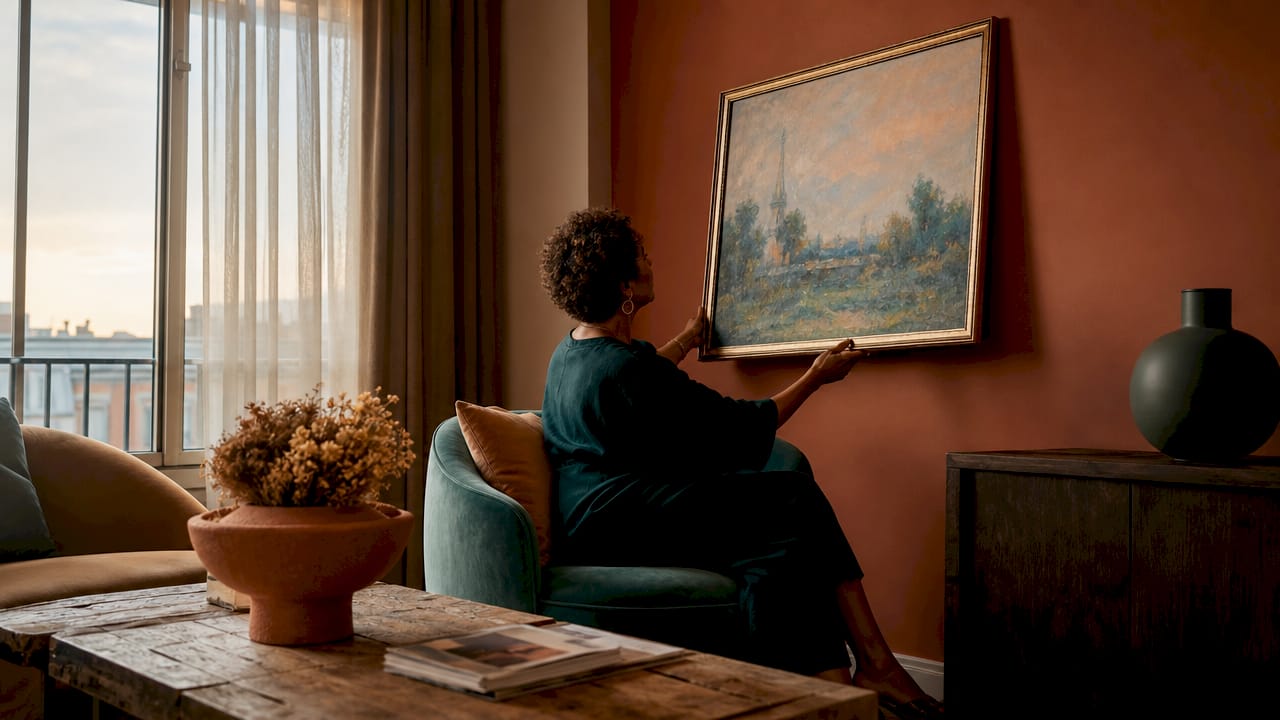
Displaying your own abstract paintings builds confidence faster than almost any other practice. When you live with a piece on your wall, you see it at different times of day and in different moods. That sustained viewing teaches you more about composition and colour than any single painting session.
A few practical points for displaying beginner work effectively:
- Frame it. Even a simple white or natural wood frame transforms a painting on paper into a finished piece. The expert framing guide at Frametheworld covers the basics clearly.
- Choose the right wall. Abstract work with strong colour reads well against neutral walls. Busy wallpaper competes with the painting rather than supporting it.
- Consider scale. A small painting on a large wall looks tentative. Either group several small works together or go larger than feels comfortable.
- Match the mood, not the colour. A calm, minimal abstract painting suits a bedroom. A bold, energetic piece works in a hallway or living room.
Abstract art also integrates naturally with modern mosaic ideas and other decorative styles that layer texture and pattern. The combination of handmade abstract work with textured surfaces creates interiors that feel genuinely personal. For guidance on selecting art that fits your existing décor, the art selection checklist at Frametheworld provides a structured approach.
Key takeaways
Abstract painting builds creative confidence through process, not perfection. The most effective approach combines limited materials, layered technique, and emotional intention from the very first session.
| Point | Details |
|---|---|
| Start with acrylics | Acrylic paint dries fast, layers easily, and suits every budget for beginners. |
| Limit your palette | Two or three colours plus white prevents muddy results and teaches colour interaction. |
| Layer progressively | Build from background wash to large shapes, then detail and contrast. |
| Use inexpensive surfaces | Heavy paper and cardboard reduce pressure and encourage free experimentation. |
| Display your work | Framing and hanging your paintings accelerates learning and builds real confidence. |
Why I think beginners underestimate abstract art
Most beginners arrive with the same quiet fear: that abstract art will expose them as someone with nothing to say. I understand that fear completely. The first time I stood in front of a blank canvas with no subject to copy, the freedom felt more like a threat than a gift.
What changed for me was limiting my palette to two colours and white for an entire month. That single constraint forced me to pay attention to things I had been ignoring: the weight of a dark shape against a light ground, the way a warm colour advances while a cool one recedes. Restricting my options made me more observant, not less creative.
The other shift was treating every canvas as a practice surface rather than a potential masterpiece. Once I stopped caring whether a piece was “good,” I started making marks I actually meant. The paintings that came out of that period were the most honest work I had done.
Abstract art rewards patience with yourself. The early pieces will feel uncertain. That uncertainty is not a sign that you are doing it wrong. It is the process working exactly as it should.
— Lennard
Abstract wall art collections worth exploring at Frametheworld
Frametheworld offers hand-painted abstract collections that give beginners a direct look at how professional abstract work handles texture, colour, and composition. The Wabi Sabi wall art collection focuses on natural imperfection and layered texture, making it a strong reference point for anyone learning to work with palette knives and organic marks. The colourful abstract paintings collection shows how bold colour relationships function at scale on a wall. Both collections are handmade on canvas, which means you can study real brushwork and texture up close. Browsing these works alongside your own practice gives you a concrete visual benchmark to learn from.
FAQ
What is abstract art and why is it good for beginners?
Abstract art communicates emotion and ideas through colour, shape, and texture rather than realistic imagery. It suits beginners because it removes the pressure of accuracy and rewards experimentation over technical precision.
What paint should a beginner use for abstract painting?
Acrylic paint is the best starting choice. It dries quickly, allows rapid layering, and is affordable and easy to clean up with water.
How do I avoid muddy colours in abstract painting?
Limit your palette to two or three colours plus white. Mixing on the palette rather than directly on the canvas keeps colours clean and compositions clear.
What is a palette knife and do I need one?
A palette knife is a flat, flexible metal tool used to spread, press, and scrape paint. It creates textured surfaces that brushes cannot produce, and most beginner abstract painters find it one of the most useful tools they own.
How do I know when an abstract painting is finished?
Step back two metres and hold the painting up to a mirror. If the composition reads as balanced and the focal point is clear, it is finished. Overworking is a more common problem than stopping too soon.

Laat een reactie achter
Deze site wordt beschermd door hCaptcha en het privacybeleid en de servicevoorwaarden van hCaptcha zijn van toepassing.