
TL;DR:
- Wabi-sabi art celebrates imperfection, process, and natural aging, grounding interiors in honesty. It emphasizes visible human touch, asymmetry, and natural materials, creating calm and authentic spaces. Building a collection slowly and thoughtfully enhances the genuine, lived-in feel central to wabi-sabi decor.
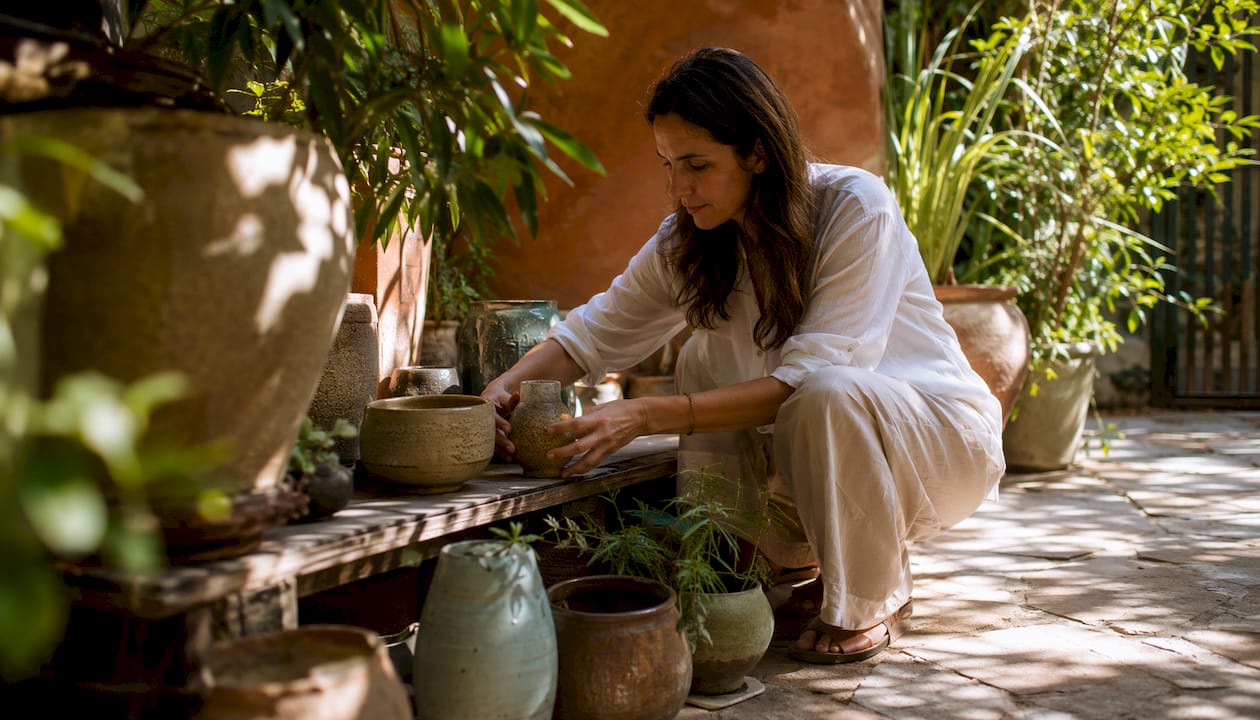
Art in wabi-sabi decor functions as a tactile, time-aware anchor that celebrates imperfection, patina, and personal narrative rather than polished perfection. Where conventional interior design treats art as decoration, wabi-sabi treats it as evidence: evidence that time has passed, that human hands were involved, that something real happened here. The philosophical root sits in Zen Buddhism, refined into a lived aesthetic by the 16th-century tea master Sen no Rikyū, whose insistence on humble, locally made utensils over imported Chinese porcelain remains the clearest model for how to choose art today. The role of art in wabi-sabi decor is not to impress but to ground a room in honesty.
Practically, this means three things: select pieces that carry visible process (brushwork, texture, asymmetry); place them with generous negative space so they can breathe; and let them age without anxiety. Frametheworld’s wabi-sabi collection offers a curated starting point for UK homeowners who want hand-painted texture and muted tonal palettes without commissioning from scratch.
- Art should show the maker’s hand: visible brushwork, uneven surfaces, raw edges.
- Scale matters: one considered piece beats a gallery wall of unrelated prints.
- Provenance counts: handmade or found objects carry narrative that mass-produced items cannot replicate.
- Placement is as important as the piece itself: negative space, low mounting, and asymmetry all reinforce calm.
Pro Tip: Before buying, ask yourself whether the piece looks as if it could have been made by one person, in one sitting, with natural materials. If the answer is yes, you are probably on the right track.
Table of Contents
- What wabi-sabi means for art: core principles you need to know
- How materials and techniques express wabi-sabi in a room
- Choosing art for a wabi-sabi home: a practical selection guide
- Placement and display: how to hang and arrange wabi-sabi art
- Caring for art while honouring impermanence
- Commissioning bespoke wabi-sabi art in the UK: what to expect
- Types of wabi-sabi art to seek out and how to pair them
- Key takeaways
- Living with wabi-sabi art: a practitioner’s note
- Frametheworld’s wabi-sabi collection: hand-painted pieces for UK homes
- Further reading and sources
What wabi-sabi means for art: core principles you need to know
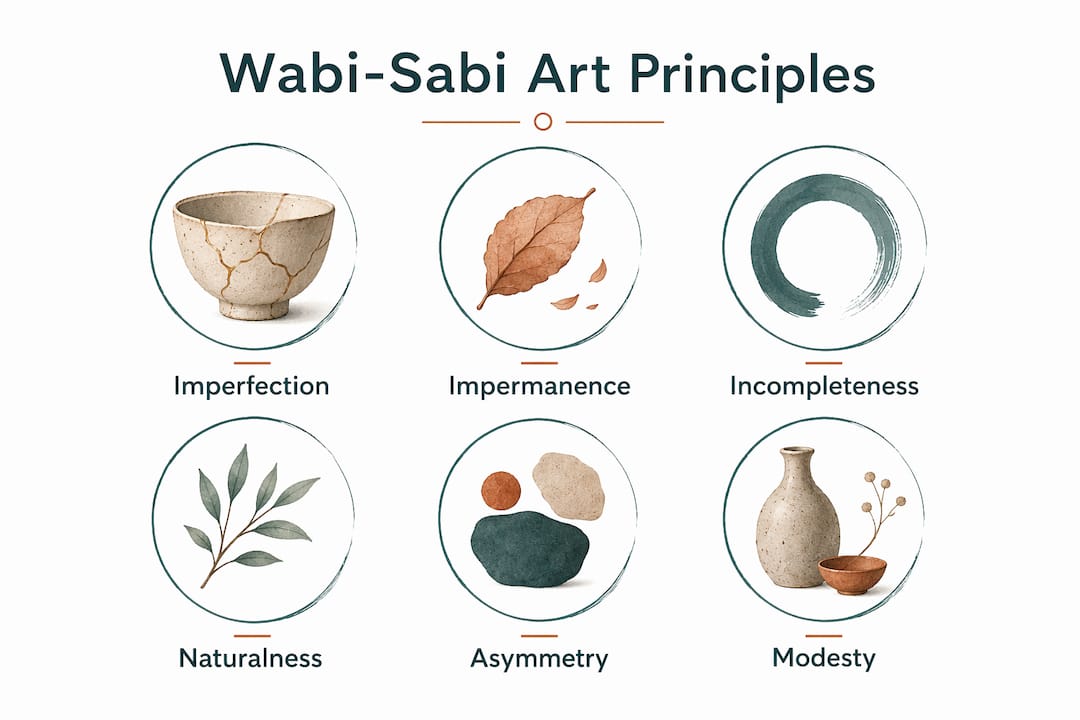
Wabi-sabi is a Japanese aesthetic that finds beauty in the imperfect, impermanent, and incomplete, valuing the handmade and weathered over the pristine and mass-produced. That single sentence contains everything you need to evaluate a piece of art for a wabi-sabi interior.
The three-part triad — imperfection, impermanence, incompleteness — translates directly into artistic decisions. Imperfection means a slightly uneven glaze, a brushstroke that does not quite resolve, a surface that shows the resistance of the material. Impermanence means the work acknowledges that it will change: pigments will soften, clay will absorb the atmosphere of the room, timber will shift with the seasons. Incompleteness is perhaps the subtlest: a composition that leaves space for the viewer’s imagination rather than spelling everything out.
Beyond the triad, wabi-sabi art is shaped by naturalness, asymmetry, modesty, and economy. Naturalness means materials that come from the earth and return to it: clay, linen, timber, iron, natural pigment. Asymmetry resists the mechanical perfection of a centred, balanced composition. Modesty rules out grandeur: a small ink drawing on rough paper carries more wabi-sabi weight than a large, gilded canvas. Economy means nothing is superfluous; every mark earns its place.
These principles are not a checklist to tick off. They are a way of looking. Once you have absorbed them, you will spot a genuinely wabi-sabi piece across a room.
How materials and techniques express wabi-sabi in a room
The clearest signals are material and process. A piece reads as wabi-sabi when time and human touch are visible: asymmetry, roughness, modesty, and the patina of age are all present in the object itself, not applied as a stylistic veneer.
The primary material signals to look for:
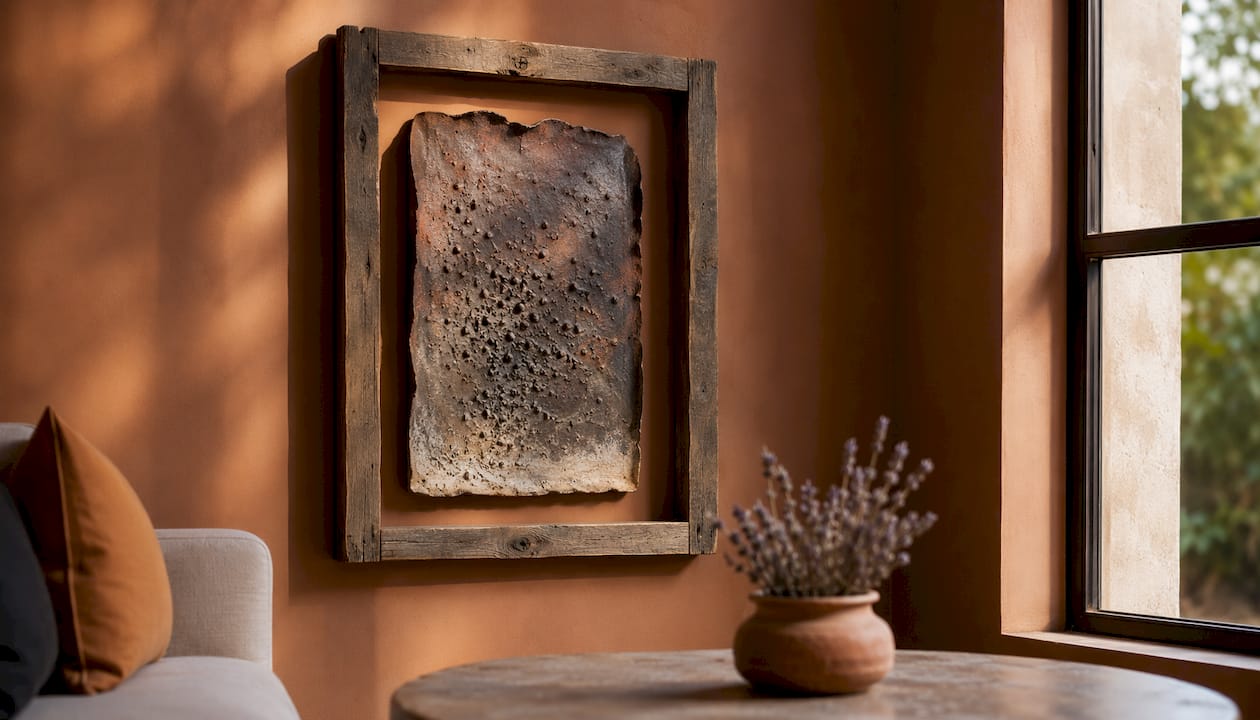
- Handmade texture: Visible brushwork, palette-knife marks, or finger impressions that prove a human made this, not a machine.
- Raw clay and unglazed surfaces: Raku ware, the pottery style developed by Sasaki Chōjirō at Sen no Rikyū’s direction, is the archetype: earthy, rough-textured, slightly irregular in form.
- Timber with patina: Reclaimed wood panels, driftwood sculpture, or timber frames where the grain and age marks are the point, not a flaw.
- Kintsugi: The practice of repairing broken ceramics with gold-dusted lacquer, celebrated across media as a technique that makes the history of damage visible and beautiful.
- Natural dyes and pigments: Indigo, iron oxide, charcoal, and plant-based colours that shift subtly over time rather than holding a fixed, manufactured hue.
- Visible brushwork in painting: Ink wash, sumi-e, or abstract hand-painted work where the stroke is not hidden but celebrated.
- Fibre arts: Hand-dyed textiles, woven wall hangings, or boro-inspired patchwork where the stitching and repair are part of the composition.
How these signals work in a room is partly about light. A textured surface catches raking light differently at different times of day, which means the piece is never quite the same twice. That quality of change is exactly what wabi-sabi encourages artists to treat as the point: the work is process-led and open to impermanence rather than a fixed, finished object.
| Material / technique | Visual effect in a room | Emotional register |
|---|---|---|
| Unglazed clay / Raku | Absorbs light, warm and matte | Grounded, earthy |
| Kintsugi ceramics | Gold seams catch light as focal points | Resilient, storied |
| Hand-painted canvas | Visible brushwork shifts with light angle | Intimate, human |
| Natural-dye textiles | Subtle tonal variation, soft edges | Calm, organic |
| Reclaimed timber panel | Grain and age marks as texture | Rooted, historical |
| Ink wash / sumi-e | High contrast with generous empty space | Contemplative, spare |
Pro Tip: Hang a textured piece where it catches natural side-light rather than direct overhead light. The shadows created by surface irregularity do more for the wabi-sabi effect than the piece itself.
Choosing art for a wabi-sabi home: a practical selection guide
The first question to ask is not “do I like it?” but “does it carry a story?” A designer checklist approach — asking about provenance, maker, materials, and repairability — is the most reliable way to distinguish genuinely handmade pieces from mass-produced items labelled “wabi-sabi” by a marketing team.
Selection checklist:
- Scale: One piece that fills a wall with presence beats three small prints competing for attention.
- Texture: Can you see or imagine the surface? Smooth, printed reproductions rarely work.
- Provenance: Who made it, where, and from what? A named maker or a found object with a clear history both qualify.
- Maker’s marks: Visible signatures, kiln marks, or hand-finishing details confirm authenticity.
- Repairability: Could this piece be restored or repaired in a way that adds to its story rather than erasing it?
- Authenticity: Does it look as though it could have been made without a factory? If not, keep looking.
Sourcing options in the UK:
- Found and antique pieces: Car boot sales, estate auctions, and architectural salvage yards regularly surface timber panels, aged ceramics, and textile fragments that carry genuine patina. Markets such as Portobello Road in London or the Tynemouth Market in the north-east are reliable hunting grounds.
- Local makers and craft fairs: The Crafts Council’s maker directory lists UK-based ceramicists, textile artists, and painters working in handmade traditions. Regional craft fairs, particularly those affiliated with the British Craft Trade Fair, are worth attending in person so you can assess texture directly.
- Curated collections: Frametheworld’s wabi-sabi wall art collection offers hand-painted canvases with visible brushwork and muted, natural palettes — a practical option for readers who want a considered piece without the lead time of a full commission.
- Commissions: For a bespoke piece, expect a UK artist to require 6–12 weeks for a small canvas and 12–20 weeks for a larger wall piece, depending on their schedule and the complexity of the brief. Broad cost guidance: small hand-painted canvases from independent UK artists typically start from around £150–£400; larger bespoke works vary considerably based on scale and artist profile.
Pro Tip: When commissioning, send the artist three images of your space — not mood-board images of other people’s rooms. The light, wall colour, and existing textures in your actual home will tell them more than any Pinterest board.
Placement and display: how to hang and arrange wabi-sabi art
The core display rules are simple: fewer, more meaningful objects win over clutter, and negative space is not wasted space — it is the breathing room that lets a piece communicate.
Core display rules:
- Negative space: Leave at least as much empty wall around a piece as the piece itself occupies. The emptiness is part of the composition.
- Asymmetry: Avoid centring a piece between two symmetrical objects. Offset it slightly, or pair it with something of a different scale on one side only.
- Single focal points: One strong piece per wall, per room if possible. Wabi-sabi is not a gallery aesthetic.
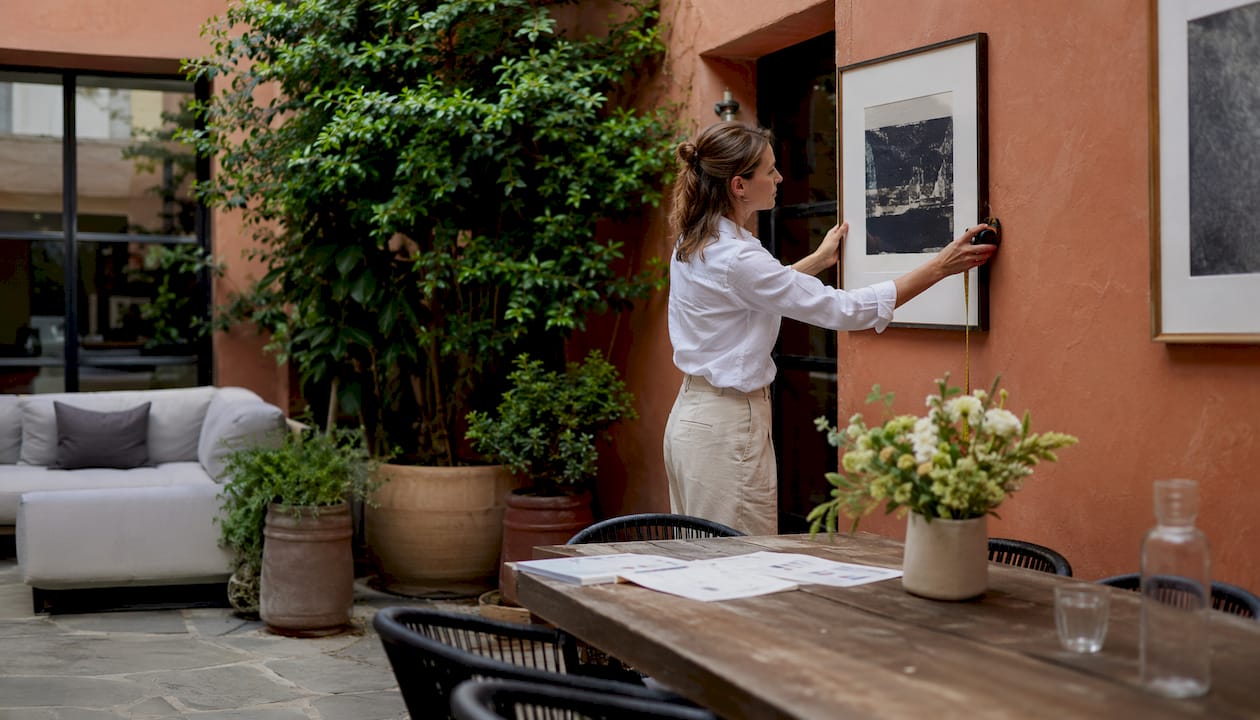
- Low mounting height: Hanging art slightly lower than the conventional “eye level” rule creates intimacy and draws the viewer in rather than presenting the piece at a formal distance.
- Framing choices: Raw timber, unfinished linen, or no frame at all. Ornate gilded frames contradict the modesty principle entirely.
Two short scenarios illustrate the difference correct placement makes.
Scenario A — incorrect: A hand-painted abstract canvas is hung centred above a sofa, flanked by two matching prints of similar size. The symmetry and repetition cancel out the individuality of the central piece. The eye bounces between the three rather than settling.
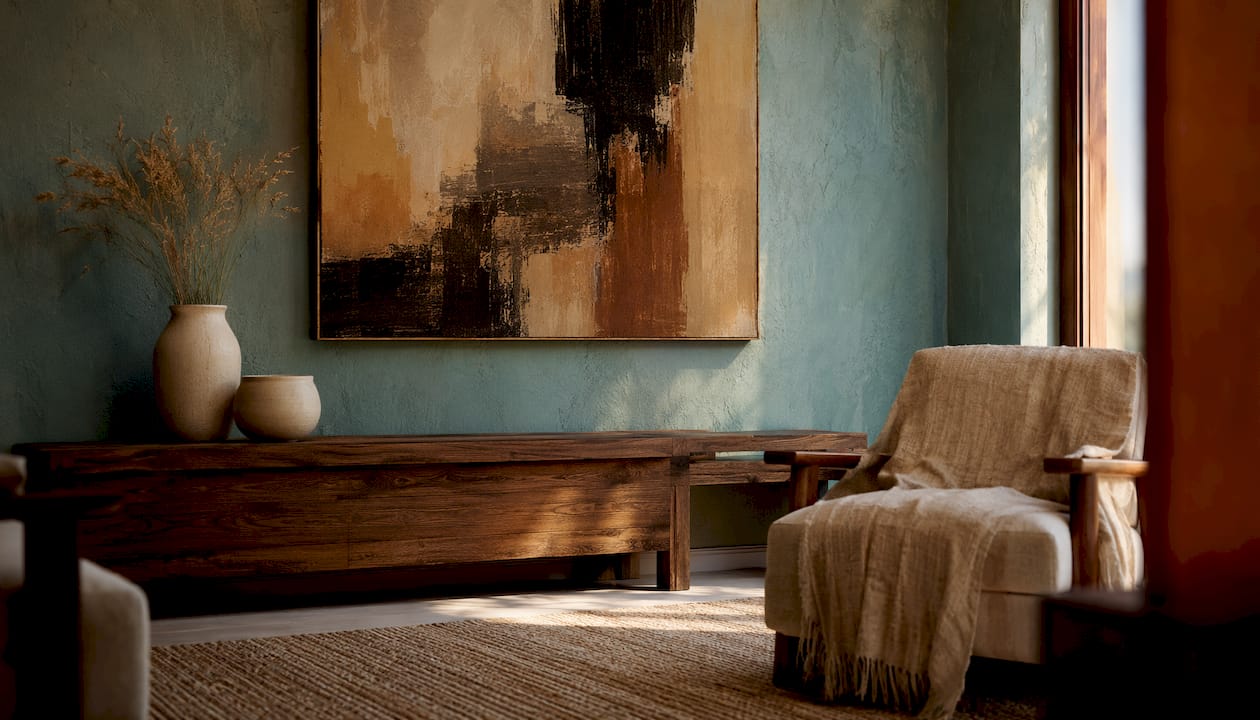
Scenario B — correct: The same canvas is hung slightly left of centre on a plain white wall, with nothing else on that wall. A single ceramic vessel sits on a low shelf below and to the right, at a different height. The asymmetry creates a quiet conversation between the two objects, and the empty wall around them gives both room to exist.
Pro Tip: Keep a consistent tonal palette even when textures vary. If your art uses warm ochres and raw umbers, carry those tones into the textiles and ceramics nearby. Visual calm comes from tonal coherence, not from matching everything.
For a low-contrast, tonal approach, pieces like Muted Noise from Frametheworld demonstrate how a restrained palette holds a room together without becoming bland.
Caring for art while honouring impermanence
The wabi-sabi approach to care is not neglect. It is the difference between allowing natural ageing and permitting preventable damage. Simple care rules apply to most pieces: dust gently with a dry, soft cloth; avoid direct sunlight where UV will bleach pigments faster than time naturally would; keep humidity reasonably stable, particularly for works on paper or natural textiles.
Daily maintenance checklist:
- Dust surfaces gently with a dry microfibre cloth, never a damp one on unvarnished or porous surfaces.
- Keep pieces away from direct radiators and air conditioning vents, which cause rapid humidity swings.
- For hand-painted canvases, avoid cleaning with any solvent or household spray — a barely damp cloth on the frame only.
- Allow ceramics and timber pieces to develop their patina naturally; do not apply wax or oil unless the maker specifically recommends it.
The distinction between casual found objects and valuable originals matters here. A piece of driftwood or a thrifted ceramic can age freely; the odd crack or darkening is part of its story. A valuable hand-painted original or a significant ceramic work is a different matter. For anything with meaningful financial or sentimental value, consult a conservator registered with the Institute for Conservation (ICON) before attempting any cleaning or repair. ICON’s find-a-conservator directory covers the whole of the UK and lists specialists by material type.
Accepting impermanence does not mean accepting damage. Psychological perspectives link wabi-sabi to wellbeing precisely because it asks us to accept natural change, not accelerated deterioration. The distinction is worth holding onto.
Commissioning bespoke wabi-sabi art in the UK: what to expect
A bespoke commission is the most direct way to get a piece that fits your space, your palette, and your brief. The process is straightforward when you know what to prepare.
Commissioning checklist:
- Brief: A short written description of the space, the mood you want, and any materials or techniques you are drawn to.
- Sample images: Three to five reference images showing texture, colour, or scale — not necessarily wabi-sabi pieces, but anything that captures the feeling you are after.
- Size: Measure the wall and decide on dimensions before approaching an artist. Vague requests (“something medium-sized”) waste time on both sides.
- Material and finish: Specify canvas, board, paper, or textile; matte or textured finish; framed or unframed.
- Delivery and framing: Confirm whether the artist handles framing and delivery, or whether you will arrange collection. For larger works, courier costs within the UK can be significant.
- Payment terms: Most UK artists ask for a 50% deposit on agreement, with the balance on completion. Confirm this in writing.
Typical UK timeline:
- Initial enquiry and brief exchange: 1–2 weeks.
- Artist proposes approach, materials, and price: 1 week.
- Production: 4–10 weeks depending on scale and complexity.
- Review, any amendments, and final approval: 1–2 weeks.
- Delivery or collection: 1 week for standard courier within the UK.
Questions to ask an artist before committing:
- What materials do you use, and how will they age over time?
- Have you worked in a wabi-sabi or textured abstract style before? Can I see examples?
- How do you handle repairs or touch-ups if the piece is damaged in transit?
- What display advice do you give for this type of work?
- What is your lead time, and do you have a contract or written agreement?
Pro Tip: Always confirm the commission in writing, even for small pieces. A simple email exchange that specifies size, materials, price, deposit, timeline, and what happens if either party needs to withdraw is enough. It protects both you and the artist.
For readers who want a hand-painted piece with wabi-sabi character but without the full commission process, Frametheworld’s textured wabi-sabi pieces are made to order and can be customised by size and colour palette.
Types of wabi-sabi art to seek out and how to pair them
The main categories worth looking for, in order of how readily they read as wabi-sabi in a UK interior:
- Wood-fired ceramics: Raku ware, Hagi ware, and similar traditions where the kiln atmosphere leaves unpredictable marks on the surface. Display on a low shelf or plinth rather than hung on a wall.
- Hand-painted abstracts: Loose, textured work in natural pigments — ochre, charcoal, raw umber, slate. Time becomes a visible collaborator in pieces where glazes blister or pigments shift.
- Hand-dyed textiles: Indigo-dyed linen, shibori, or boro-inspired patchwork hung as wall pieces. The irregular dye lines and visible stitching are exactly the kind of human trace wabi-sabi values.
- Natural sculpture: Driftwood, stone, or found objects arranged with intention. The key is restraint: one object, well placed, rather than a collection of things.
- Kintsugi-repaired ceramics: If you have a broken piece you love, having it repaired with kintsugi technique is one of the most direct expressions of wabi-sabi philosophy available to a UK homeowner. Several UK-based ceramicists now offer the service.
- Ink wash and sumi-e prints: High-contrast, minimal compositions with generous empty space. These work particularly well in contemporary urban flats where the walls are already clean and spare.
Pairing with common UK interior styles:
- Period homes (Victorian, Edwardian): Wabi-sabi pieces work well against original plaster walls and stripped timber floors. The existing patina of the building does half the work. Choose one large hand-painted canvas or a grouping of ceramics rather than competing with the architecture.
- Contemporary urban flats: The clean lines and neutral walls of a modern flat are an ideal backdrop. A single textured abstract, such as Frametheworld’s Rustic Abstraction, introduces warmth without disrupting the minimal geometry.
- Coastal cottages: Natural materials already dominate — timber, stone, linen. Layer in hand-dyed textiles and driftwood pieces, and keep the palette within the existing tones of sand, slate, and sea-washed wood.
Build a collection slowly. Interior designers advise layering pieces over years rather than shopping a room in a single trip; the narrative and emotional connection that accumulates over time is precisely what wabi-sabi is about. Pairing wabi-sabi pieces with mindful decor approaches that prioritise calm over trend reinforces this slow-curation principle.
Pro Tip: Resist the urge to fill every wall. A room with one or two genuinely considered pieces and a lot of breathing space will always feel more wabi-sabi than one where every surface has been styled.
Key takeaways
Art in wabi-sabi decor works because it makes time, process, and human touch visible — and those qualities create the calm, authentic atmosphere that no mass-produced print can replicate.
| Point | Details |
|---|---|
| Choose for process, not polish | Select pieces with visible brushwork, texture, or asymmetry; avoid smooth, printed reproductions. |
| Negative space is non-negotiable | Leave generous empty wall around each piece; the space around art is as important as the art itself. |
| Source slowly and deliberately | Build a collection over years, mixing found objects, local makers, and commissions for genuine narrative. |
| Commission with a written brief | Provide size, material, palette, and timeline in writing; expect 6–20 weeks for UK bespoke work. |
| Frametheworld as a starting point | Frametheworld’s hand-painted wabi-sabi collection offers curated, textured pieces ready to order or customise. |
Living with wabi-sabi art: a practitioner’s note
The most common mistake people make when decorating with wabi-sabi philosophy is buying the aesthetic rather than adopting the attitude. A room full of deliberately distressed objects, all sourced in a single weekend, looks exactly like what it is: a room full of deliberately distressed objects. The philosophy resists that kind of efficiency.
What actually works is restraint over time. One piece that genuinely moves you, placed where you will see it every morning, does more for the quality of a room than ten pieces chosen because they fit a mood board. Wabi-sabi creates a home that feels authentic and lived-in precisely because the objects in it have been chosen slowly, used, and allowed to change. The crack in a ceramic, the fading of a natural dye, the way a canvas darkens slightly near the window — these are not problems to solve. They are the point.
Combining wabi-sabi pieces with other interior vocabularies works best when the wabi-sabi objects are treated as narrative anchors and everything else is simplified around them. That means editing ruthlessly. If a piece no longer earns its place, move it rather than keeping it out of habit. The collection should feel like it is still becoming, not like it has been finished.
Pro Tip: Once a year, remove everything from a shelf or wall and put back only what you genuinely want to see. The pieces that feel wrong to return are the ones to let go.
Frametheworld’s wabi-sabi collection: hand-painted pieces for UK homes
If you have read this far and want a piece that genuinely reflects the principles above — visible texture, natural palette, human brushwork — without the 12-week wait of a full commission, Frametheworld is a practical next step. The wabi-sabi wall art collection is made up of hand-painted canvases with muted, earthy tones and surface irregularity that reads as authentic rather than manufactured.
The process is straightforward:
- Browse the collection by size, palette, and texture to find a piece that fits your space.
- Request a customisation — size, colour direction, or finish — directly through the product page.
- For a fully bespoke commission, contact the team with your brief, reference images, and wall dimensions.
Delivery across the UK is handled with care, and pieces can be ordered framed or unframed depending on your display preference. There is no pressure to commit to a large commission immediately; the ready-made collection is a genuine option for readers who want to start with one considered piece and build from there.
Further reading and sources
- Japanese Aesthetics — Stanford Encyclopedia of Philosophy: The most rigorous academic treatment of wabi, sabi, and related concepts, including primary sources from Sen no Rikyū and Tanizaki Jun’ichirō. Essential for understanding the philosophical depth behind the aesthetic.
- Wabi-sabi — Wikipedia: A well-sourced overview covering history, materials, techniques, and cultural lineage, including kintsugi and Raku ware. Useful as a reference for technique names and historical context.
- What is wabi-sabi? Will this Japanese philosophy make me happy? — The Conversation: An accessible academic perspective on the psychological and wellbeing dimensions of wabi-sabi, written by a researcher in the field.
- What Is Wabi-Sabi? Alex Eagle Explains How to Bring the Aesthetic Home — Vogue: Practical design commentary from a respected stylist on how wabi-sabi translates into contemporary UK and European interiors.
- Why the wabi-sabi aesthetic keeps coming back — Martha Stewart: Retail and trend context for the rise of handmade, thrifted, and tactile objects in home interiors; useful for sourcing and layering guidance.
- What is Wabi-Sabi Art? — Fibre Arts Take Two: A practitioner’s perspective on how wabi-sabi shapes artistic process, particularly in textile and mixed-media work.
- How to incorporate wabi-sabi interior design into your home — Fleur Studios: A designer’s checklist approach to sourcing and layering; particularly useful for the commissioning and selection sections.
- Art and interior design: How to transform your space — AboutWallArt: Covers the primary functions of art in interior design — focal points, atmosphere, personal narrative — and how these align with wabi-sabi priorities.
- Wabi-Sabi Meaning: The Beauty of Imperfection in Japanese Art — Art with Symbols: A detailed survey of wabi-sabi’s influence on art history, from Raku tea bowls to kintsugi and ink wash painting.
- Mindful decor trends that feel calm — Root & Still: Trend and styling context for calm, mindful interiors; useful for pairing wabi-sabi pieces with broader UK decor approaches.
- Wabi-Sabi Wall Art — The Beauty of Imperfection — Frametheworld: Frametheworld’s editorial guide to the aesthetic, with styling ideas and examples from the hand-painted collection.


Leave a comment
This site is protected by hCaptcha and the hCaptcha Privacy Policy and Terms of Service apply.