
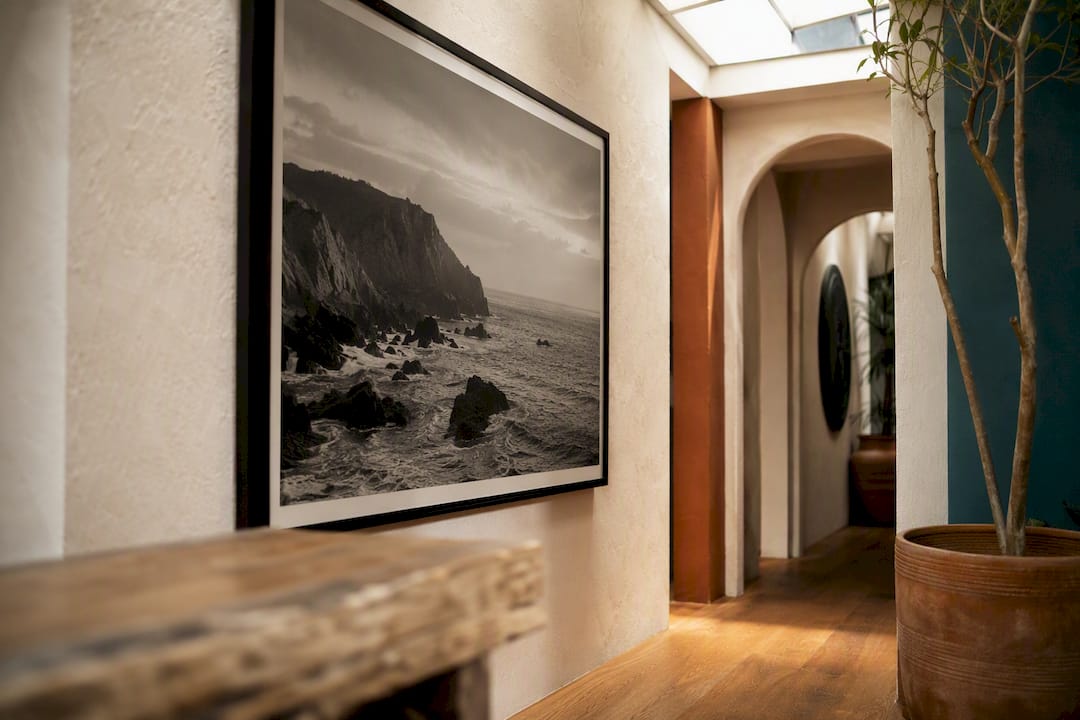
Choose art-first coastal pieces: abstract tonal washes, gallery-scale seascape photography or tactile handmade work, so the room reads as curated rather than themed. That single decision separates coastal interiors that feel considered from ones that feel like a gift shop. Abstract and minimalist coastal art ages better than literal beach props, largely because it doesn’t date the moment a trend passes.
For most homes, six categories do the heavy lifting:
- Abstract ocean washes in muted blues, sand and teal
- Large-scale seascape photography, in monochrome or colour
- Textured handmade pieces: driftwood, woven fibre, macramé
- Botanical coast studies using grasses and coastal plants
- Nautical accents used sparingly, not as the whole scheme
- A curated gallery wall mixing materials and scale
Frametheworld works with clients on bespoke seascape paintings and framing built for exactly this brief, sized and finished to suit the wall rather than picked off a shelf.
Key Takeaways
Art-first coastal decorating works because abstract, textured and large-scale pieces read as considered design rather than themed decor, and they hold their finish far longer in bright or humid rooms.
| Point | Details |
|---|---|
| Lead with abstract or photographic art | Choose tonal washes or large-scale seascape photography over literal beach props for a room that stays current. |
| Scale before you buy | Size art to an appropriate scale for your sofa and preview with a mock-up before committing to a large piece. |
| Mix materials on gallery walls | Combine prints, driftwood and woven texture with visible negative space rather than repeating one medium. |
| Prioritise UV-resistant materials | Use archival pigments or protective glazing on sun-facing walls to stop fading within a short period. |
| Consider a bespoke commission | Frametheworld sizes and finishes seascape and coastal pieces to fit a specific wall rather than a stock dimension. |
Table of Contents
- 1. Abstract ocean washes for a calm, grown-up mood
- 2. Large-scale seascape photography as a single hero piece
- 3. Textured, handmade pieces that add depth
- 4. Botanical coast studies for a subtle reference
- 5. Nautical accents, used sparingly
- 6. A curated gallery wall that mixes material, not just imagery
- Getting scale, palette and frame right
- Choosing materials that survive sun and humidity
- Why art-first thinking is overtaking beach-shop decor
- Getting a coastal piece made to fit your wall, not the other way round
- Sources
1. Abstract ocean washes for a calm, grown-up mood
An abstract seascape does something a literal beach photo can’t: it suggests water, light and horizon without pinning the room to a specific holiday snap. Think tonal washes in muted teal, slate grey or warm sand, applied with loose brushwork rather than crisp representational detail. These work particularly well above a sofa or in a bedroom, where you want atmosphere rather than a focal story.
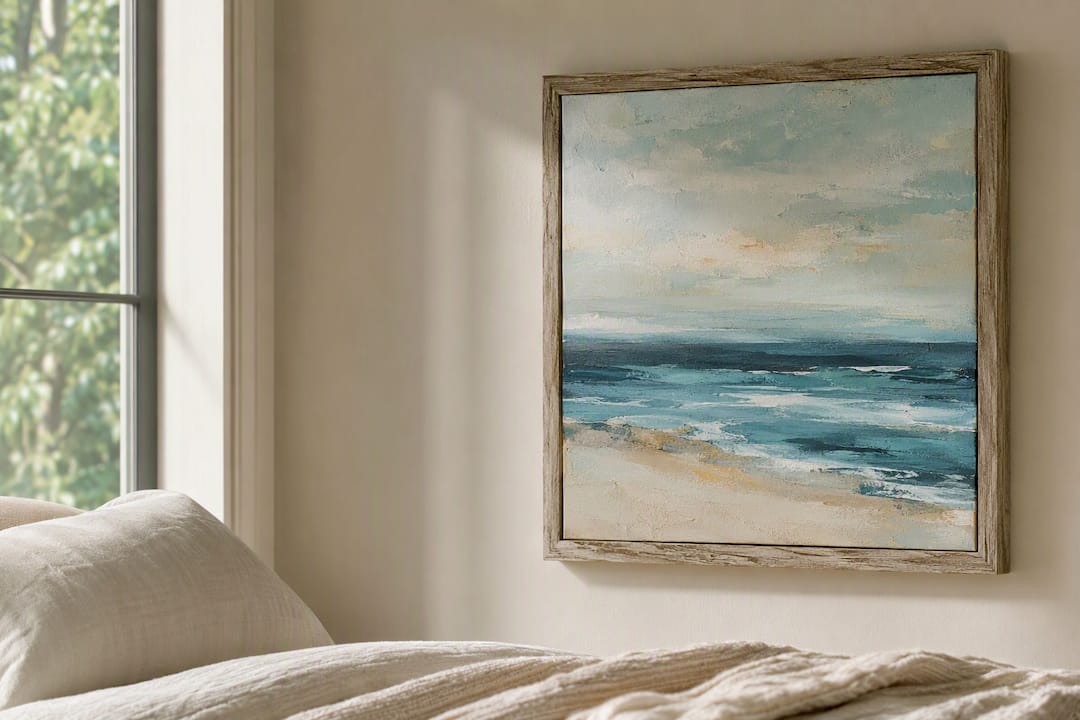
Frame choice matters more than people expect here. A hand-painted abstract seascape with visible texture holds up in natural light and rewards a closer look, which a flat print rarely does. Pair it with a light timber or unfinished oak frame, or skip the frame entirely for a raw canvas edge if the wall already has plenty of other detail.
2. Large-scale seascape photography as a single hero piece
Designers often reach for one large photographic seascape rather than a cluster of smaller prints, and the logic holds up: scale alone can do the job that five small frames would otherwise need to do together. A monochrome coastal photograph reads as more architectural and works well in contemporary interiors; colour versions suit rooms already built around a warmer palette.
Hallways, stairwells and dining rooms all benefit from this approach because a single dominant piece gives the eye somewhere to land immediately, rather than scattering attention across a wall.
3. Textured, handmade pieces that add depth
Driftwood assemblages, woven fibre wall hangings and macramé panels bring a tactile quality that flat prints simply can’t replicate. These pieces catch light differently throughout the day, which gives a room a sense of change rather than a static, printed feel.

Pro Tip: Hang one textured piece per wall, not two. Overlapping tactile pieces on the same surface tends to flatten the effect rather than double it.
4. Botanical coast studies for a subtle reference
Coastal grasses, dune plants and palm studies reference the seaside without saying “beach house” outright. A framed botanical print in soft greens and sandy neutrals slots easily into a scheme that already leans coastal, without duplicating the same blue-and-white palette on every wall.
5. Nautical accents, used sparingly
Rope details, vintage maps, ship silhouettes and porthole-style mirrors can work, but only as accents rather than the whole story. One antique map in a hallway reads as collected and interesting. Five nautical items across a living room reads as a theme park. The rule of thumb: if you can spot the “theme” the moment you walk in, pull something back.
6. A curated gallery wall that mixes material, not just imagery
A gallery wall succeeds when it mixes texture, prints and natural objects rather than repeating the same medium six times over. Combine a framed photograph, an abstract canvas, a small piece of driftwood art and one empty gap of negative space, and the wall starts to feel personal rather than assembled from a single catalogue page.
Negative space is the part people skip. Leaving visible wall between pieces, rather than packing them edge to edge, is what keeps a gallery wall from tipping into clutter.
Getting scale, palette and frame right
Decide the mood before you decide the pieces. Warm, sunset-toned coastal art (terracotta, amber, dusty pink skies over water) suits a cosy, lived-in living room. Monochrome or cool-toned seascapes suit a more minimal, contemporary space. Mixing both across the same room rarely works.
Scale follows a few reliable rules:
- Above a sofa: the artwork should span roughly two-thirds of the sofa’s width
- Above a bed: slightly narrower than the headboard, centred
- Above a mantel: leave breathing room either side, don’t run edge to edge
- Gallery walls: keep 5 to 8 centimetres between frames for a considered look, tighter for a denser, gallery-style hang
Frame material changes the entire register of a piece. Framing and finish choices strongly influence how coastal art reads within an interior — a rattan or light oak frame softens a photograph into something more relaxed, while a slim black frame pushes the same image towards a more formal, gallery feel. Linen mats do something similar for prints, adding warmth without competing with the palette.
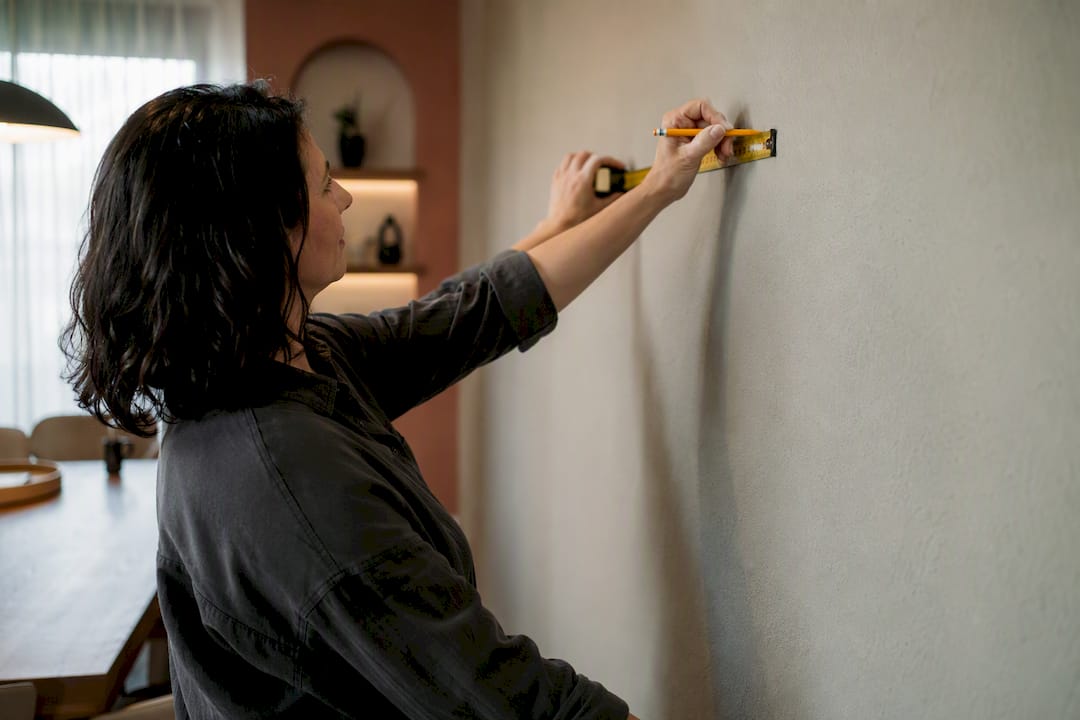
Before committing to a large piece, preview tools or printed mock-ups taped to the wall reduce the risk of choosing the wrong scale for the space. It sounds basic, but it’s the single easiest way to avoid a piece that looks perfect online and undersized in person.
Coordinate the art’s palette with what’s already in the room: linen cushions, rattan furniture and driftwood accessories all echo the textures found in good coastal styling advice on trim and finishes, and picking art that shares those tones keeps the whole scheme cohesive rather than art that sits apart from the furniture.
Choosing materials that survive sun and humidity
Coastal homes get more sun, more salt air and more humidity than the average living room, and cheap prints show it fast.
- Archival, UV-resistant pigments hold colour far longer than standard inkjet prints on a sun-facing wall
- Canvas prints handle humidity better than paper-based prints in bathrooms or conservatories, provided the canvas itself is properly sealed
- Framed giclée prints under UV-protective glazing suit brighter rooms where you still want a framed, formal look
- Original hand-painted pieces, properly varnished, tend to outlast most printed alternatives in direct light
- Dust with a soft, dry cloth; avoid glass cleaner directly on canvas or painted surfaces
- Cheaper prints without UV-resistant treatment can fade noticeably within a short period in a bright, south-facing room
If you’re furnishing a sunroom or a bathroom with sea views, this is where spending slightly more on the right pigment or glazing pays off over years, not months.
Why art-first thinking is overtaking beach-shop decor
Coastal interiors have genuinely moved on from shells in a jar and driftwood signage spelling out “Beach House.” The shift towards art-led palettes and texture, rather than literal beach motifs, is the single most useful thing a homeowner can act on right now, because it’s the difference between a room that looks tired in three years and one that doesn’t.
Where I think most advice gets it wrong is in treating scale and durability as afterthoughts. People spend real time agonising over which shade of blue to pick, then hang a print with no UV protection directly opposite a south-facing window and wonder why it’s washed out by the following summer. Finish and pigment quality deserve the same attention as colour choice, not less.
The other habit worth breaking is buying five small pieces when one well-scaled piece would do more work. A single large abstract or seascape, chosen deliberately for the wall it’s going on, almost always reads better than a scattered collection assembled in a hurry. If you’re commissioning something bespoke, that’s exactly where getting the size and finish specified properly from the start earns its cost back.
— Lennard
Getting a coastal piece made to fit your wall, not the other way round
A print sized for a generic living room rarely fits the actual wall you’re hanging it on, which is why so many coastal rooms end up with art that looks slightly wrong without anyone quite knowing why. Frametheworld builds coastal and seascape pieces to the size, palette and finish a specific room needs, rather than asking you to compromise on a stock dimension.
The wabi-sabi collection covers the tactile, textured look that works so well in coastal living rooms, while warmer sunset palettes sit in the colourful wall art collection. Every piece can be framed with UV-resistant glazing and finish options suited to sun-facing rooms or humid coastal air. Browse the full collection or get in touch to discuss a bespoke commission sized for your exact wall.
Sources
- Top 15 Coastal Wall Art Ideas from Designers - Hackrea
- How to Style a Coastal Gallery Wall in Your Living Room


Leave a comment
This site is protected by hCaptcha and the hCaptcha Privacy Policy and Terms of Service apply.